- Industrial animal farming causes systemic suffering
- Reforms reduce suffering, but do not remove it
- Animal welfare and animal rights do not fully overlap
- The key dispute is whether exploitation is acceptable
- Better conditions do not cancel out slaughter
- “Humane animal farming” remains a disputed concept
- The transition approach seeks less dependence on animals
- Plant-based foods are part of the solution
- Cultivated meat offers a new direction
- Food ethics is now a central question
- The future depends on the moral status of animals
- Society finds the current model harder and harder to accept
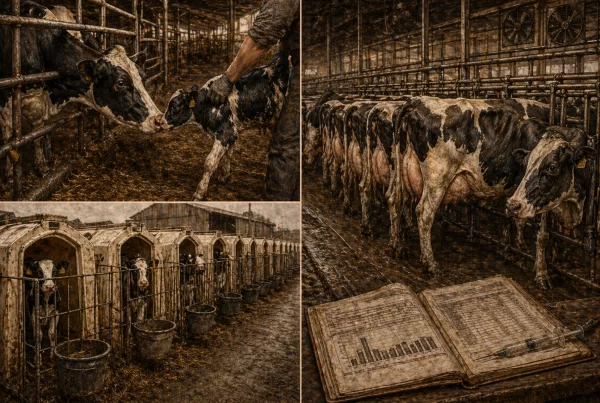
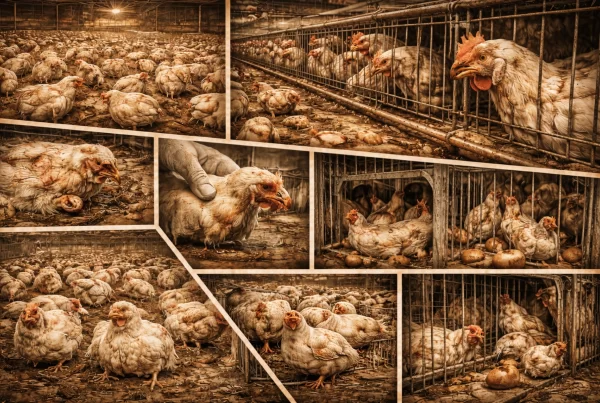
In this category, we look at the living conditions of animals raised in modern agriculture. Broiler chickens bred for extreme growth often suffer from skeletal diseases. Pigs confined in gestation crates cannot even turn around. Dairy cows bred for high milk production face metabolic stress and early culling.
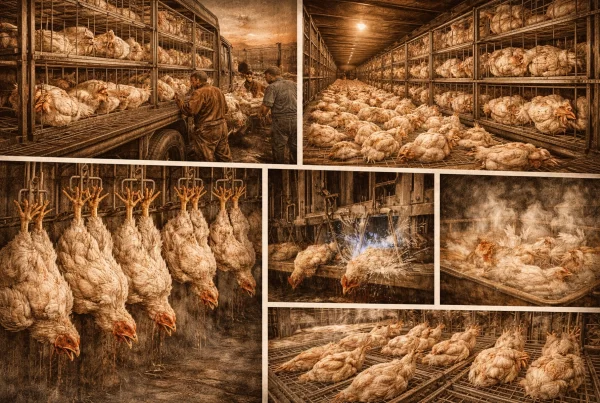
Even at the end of their lives, animals cannot leave peacefully, but endure transport and slaughter systems that can cause acute distress.
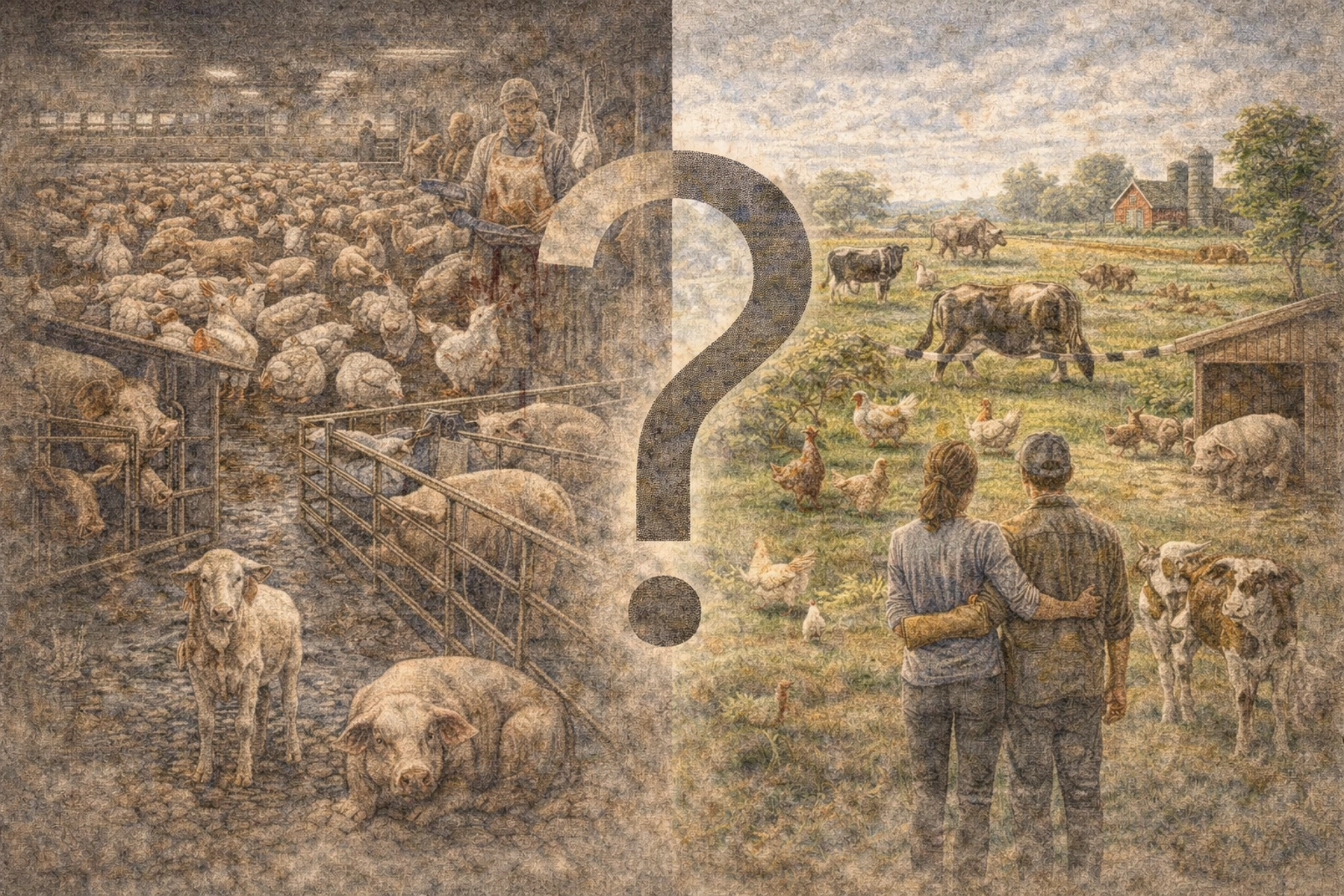
These realities raise a fundamental question: can animal farming ever truly be humane?
For decades, animal welfare organizations have promoted reforms aimed at reducing suffering. These include eliminating extreme confinement systems, improving living conditions, and developing more humane slaughter practices. Critics, however, argue that such reforms fail to address the deeper ethical problem: the continued use of animals for human purposes.
The debate between animal welfare reform and respect for animal rights is now one of the central questions in food ethics.
The animal welfare approach
Organizations such as Compassion in World Farming and international bodies such as the World Organisation for Animal Health promote reforms aimed at reducing suffering in animal farming.
Their approach accepts that humans are likely to continue using animals for food for the foreseeable future. Therefore, the ethical goal becomes minimizing unnecessary suffering.
Common welfare reforms include:
- banning battery cages for laying hens
- phasing out gestation crates for pigs
- improving housing conditions, or rather the way animals are packed together
- using slower-growing chicken breeds
- improving slaughter standards, as paradoxical as that may sound, but this is where things stand for now
From this perspective, improving the lives of billions of animals represents meaningful moral progress.
Critics, however, argue that these reforms address the symptoms, not the root of the problem.
The animal rights perspective
Philosophers such as Gary L. Francione and Tom Regan argue that animals possess inherent moral value and should not be treated as resources at all.
According to this view, the problem is not simply suffering, but exploitation itself.
Even under the best farming conditions:
- animals are raised for human use
- their reproduction is controlled
- they are ultimately killed for food, skins and other genius purposes
Therefore, critics argue that the concept of “humane farming” may be contradictory.
As Francione is known for arguing:
“If animals are property, their interests will always be secondary to the economic interests of their owners.”
From this perspective, meaningful ethical progress requires a complete end to the use of animals in agriculture.
Limits of animal welfare reforms
Even critics who support animal welfare reforms recognize their limitations.
For example:
- Cage-free systems allow hens more movement, but still involve mass confinement.
- Slower-growing broilers reduce lameness, but are still slaughtered at a young age.
- Pasture-based systems improve living conditions, but still end in slaughter.
This raises a philosophical question:
Can killing an animal that does not want to die ever be considered humane?
Animal welfare science primarily measures suffering — through indicators such as health, behavior and stress hormones. However, it cannot fully resolve questions about the moral legitimacy of killing animals for food.
Transitional perspective
Some scholars propose a third approach that combines elements of both views.
Within this framework:
- welfare reforms reduce suffering in the short term
- technological and dietary changes reduce dependence on animals over time
Several developments support this transition:
Plant-based foods
Global markets for plant-based meat and dairy alternatives are growing rapidly.
Alternative proteins
Technologies such as cultivated meat aim to produce animal proteins without raising or slaughtering animals.
Dietary changes
Research shows that reducing the consumption of animal products can improve both environmental sustainability and public health.
This transitional perspective does not suggest that animal farming will disappear overnight. Instead, it envisions a gradual shift toward food systems that rely less on animals.
Why this debate matters
The ethical questions around animal farming extend far beyond farming practices.
They touch on broader issues such as:
- the moral status of animals
- humanity’s relationship with other species
- environmental sustainability
- the future of global food systems
Industrial animal farming currently involves tens of billions of animals around the world every year. Decisions about how societies produce food therefore have profound ethical and environmental consequences.
Understanding the differences between welfare reform and abolitionist — a complicated word meaning aimed at abandonment — perspectives helps clarify the choices societies face.
The future of food ethics
Over the last century, public attitudes toward animals have changed significantly. Practices once widely accepted — such as battery cages and gestation crates — are increasingly criticized, although for now without much result.
Future debates about animal farming will likely revolve around three key questions:
- How much suffering is acceptable in food production?
- Do animals have moral rights not to be used by humans?
- What role should animals play in future food systems?
These questions still do not have universally agreed answers. However, the increasing visibility of animal treatment issues suggests that the ethics of food production will remain a central topic in public discourse.
The concept of humane animal farming remains deeply disputed.
Animal welfare reforms can reduce suffering and improve the living conditions of animals currently raised in agriculture. Critics, however, argue that as long as animals are bred, controlled and killed for human purposes, the system cannot truly be humane.
Whether societies ultimately pursue animal welfare reform, the abolition of animal farming, or a gradual transition toward alternative food systems remains an open question. What is clear is that the ethical status of animals in agriculture is no longer taken for granted.
Understanding this debate is essential for anyone trying to navigate the complex moral landscape of modern food production and, through their actions, contribute to positive change on a global scale.
Sources:
https://www.humanesociety.org/sites/default/files/docs/hsus-report-animal-welfare-industrial-agriculture.pdf
https://www.ciwf.org.uk/research/
https://www.ciwf.org.uk/farm-animals/
https://www.woah.org/en/what-we-do/standards/codes-and-manuals/terrestrial-code-online-access/
https://www.woah.org/fileadmin/Home/eng/Health_standards/tahc/current/chapitre_aw_introduction.pdf
https://www.woah.org/fileadmin/Home/eng/Health_standards/tahc/current/chapitre_aw_slaughter.pdf
https://global.oup.com/academic/product/animals-as-persons-9780231149556