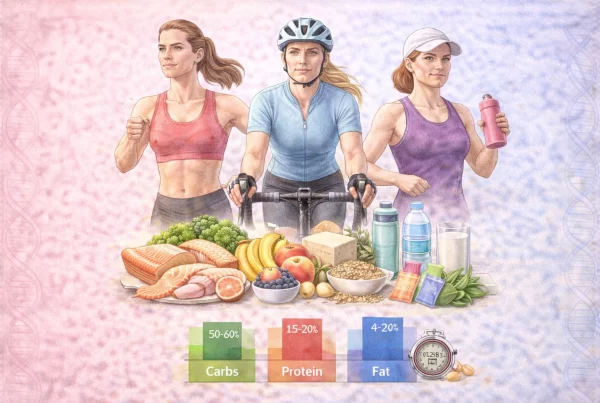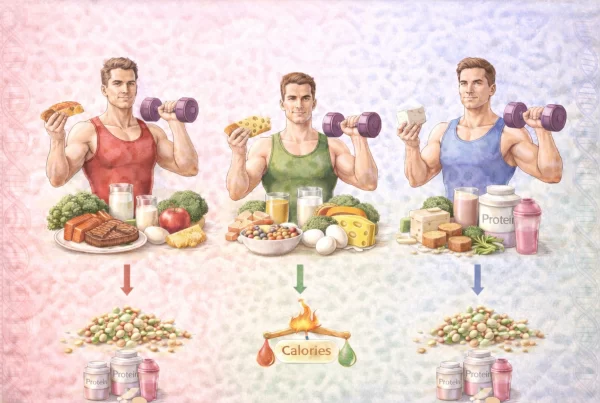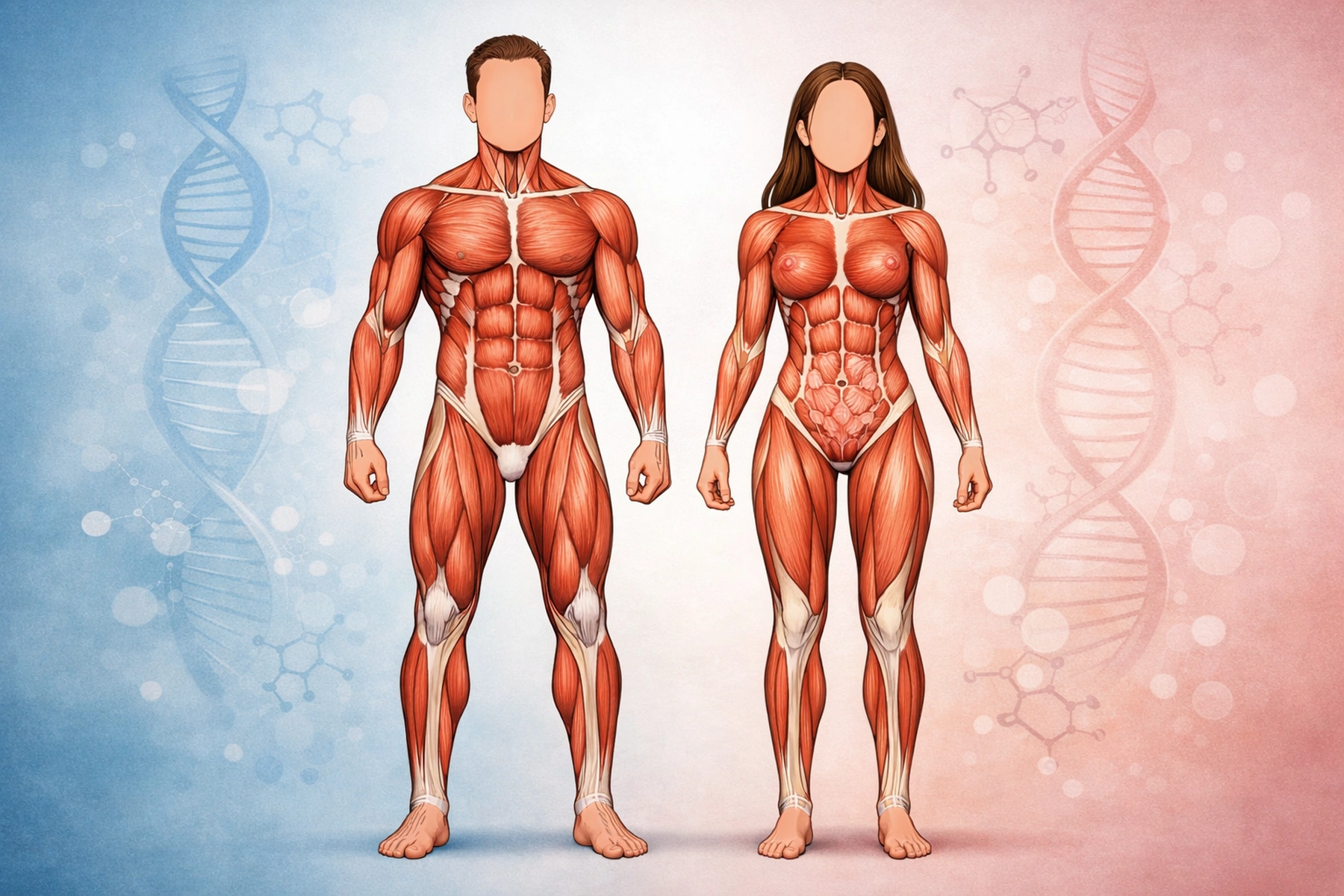
- Sex changes nutritional needs
- Women are more vulnerable to iron deficiency
- Men are more vulnerable to low Omega-3 levels
- Protein needs are not the same
- Calcium and vitamin D require more attention
- Plant-based eating requires planning
As we explained in the article “Differences in Macronutrient Metabolism Between Men and Women”, our bodies are structured differently and, as a result, have different needs and different capacities for absorbing nutrients. In other words, vegetarian and vegan nutrition differs between the two sexes.
The main reasons for these differences are hormones — estrogen, progesterone/testosterone, body size, the amount of muscle mass, and menstrual cycles in women. As a result, with any type of diet, not only plant-based ones, we need to take into account the specific characteristics of our bodies that are determined by our sex and address them effectively.
We will look at the main differences in the absorption of micro- and macronutrients, such as iron, Omega-3, proteins, calcium, vitamin D, and iodine
Iron metabolism: Women are significantly more vulnerable
Why women are at higher risk:
- Premenopausal women have much higher iron needs due to menstrual losses.
- Plant-based iron is non-heme iron and has lower absorption.
- Estrogen increases reliance on fat instead of carbohydrates, but it does not protect iron stores.
- Progesterone increases metabolism during the luteal phase, which leads to slightly higher micronutrient needs.
With vegan/vegetarian diets:
Women are more likely to develop low ferritin levels (a protein in the body that binds to iron and stores it, acting as a buffer against both iron deficiency and iron overload) when following plant-based diets.
Men, in general:
- Have low iron needs
- Rarely develop iron deficiency on vegan or vegetarian diets
- May accumulate excess iron if they take supplements unnecessarily, but unfortunately that will not make them relatives of Iron Man

What do these wise conclusions mean in reality:
For women on a plant-based diet, ladies, you can do the following:
- Combine sources of iron with vitamin C for better iron absorption
- Avoid tea/coffee close to meals
- Check your ferritin levels periodically
- Increase iron intake during the luteal phase (higher metabolic needs)
Men on a plant-based diet:
- Avoid additional iron intake unless this need has been tested
- Use standard practices for plant-based iron, but there is no need for special attention
Omega-3: Men are more vulnerable, women are more efficient
What difference does it make whether Omega-3 comes from vegetarian or vegan diets?
Plant-based diets are usually low in preformed DHA/EPA (DHA (docosahexaenoic acid) and EPA (eicosapentaenoic acid) are long-chain omega-3 fatty acids found mainly in cold-water fish, algae, and seafood), unless algae oil is used.
Women, especially premenopausal women:
- Have higher DHA levels with similar ALA intake (Alpha-Linolenic Acid – an omega-3 fatty acid)
- Estrogen increases conversion
- Many of them maintain adequate DHA levels with ALA-rich foods alone
Men:
- The conversion rate is significantly lower
- They are much more likely to have suboptimal EPA/DHA levels
- Vegan men benefit most noticeably from algae-derived DHA/EPA supplements
What do these wise conclusions mean in reality:
Women:
- Add flaxseed, chia, walnuts + a little algae oil if necessary
- Additional support in the form of supplements or adding certain foods to the diet may be needed during pregnancy
Men:
- A greater need for DHA/EPA supplementation
- Relying on ALA alone may not be enough
Protein: Differences in protein needs and lean mass affect plant-based planning
Women:
- Lower baseline muscle mass
- More efficient fat oxidation → sometimes less hunger → risk of insufficient protein intake, especially on high-fiber vegan diets
- Slightly higher protein needs during the luteal phase
- More prone to low energy availability → suppressed metabolism
Men:
- Higher lean mass → higher absolute protein requirements per day
- Often higher training loads → greater need for protein
- Vegan men may need a targeted intake of high-quality plant proteins or isolates to maintain muscle mass (soy, seitan, pea isolate)
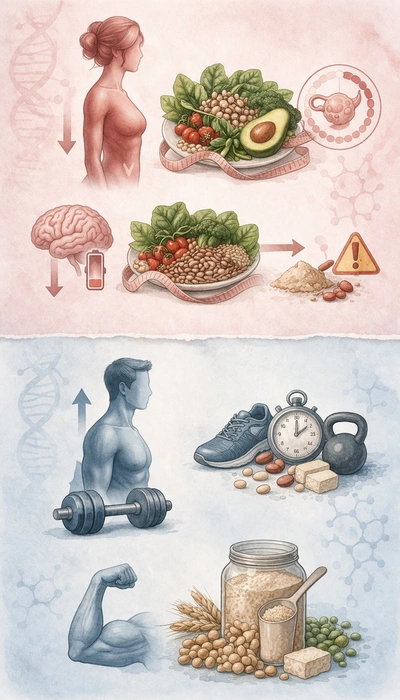
What does this mean for both sexes?
Protein quality is more important in plant-based diets because many plant proteins have lower leucine content.
BUT sex changes how easy it is to reach these goals:
Gender | Challenge | Решение |
Women | High fiber → feeling full → malnutrition; luteal protein needs ↑ | Lower-fiber carbs around workout; soy-rich meals |
Men | Higher absolute grams are needed; it's harder to get enough protein without planning | High-calorie plant proteins (seitan, tofu, tempeh); combinations; isolates |
Calcium and vitamin D: Women, especially vegans, are at higher risk
Plant-based diets can provide enough calcium, but sex-specific physiology changes the risk profile.
Women:
- Estrogen protects bone density — BUT when estrogen fluctuates or decreases (luteal phase, menopause), calcium needs increase
- Vegan women show a higher risk of fractures in cohort studies when calcium intake is <750 mg/day
- Lower body weight, which is common among vegan women, increases the risk
Men:
- Generally better bone density
- Greater body mass → higher usual calcium intake even on plant-based diets
- Lower risk of fractures in cohort studies
Specific risks:
- Low calcium intake among vegans who rely only on whole foods
Since switching from an omnivorous diet to a plant-based one does not necessarily mean health, strength, longevity, tight skin, no wrinkles, and everything else we might wish for, we need to keep in mind the risks and the planning we have to do in our everyday lives. The next table will help us take the first step in that direction, if we want to, of course 🙂
Nutrients / Sphere | Men (omnivores → herbivores) | Women (omnivores → herbivores) |
Iron | Low risk of deficiency | High risk (most vulnerable group) |
Omega-3 DHA/EPA | High risk (poor uptake) | Low risk (better absorption) |
Proteins | Need a larger quantity | Difficult to obtain in the necessary quantities when there is a lot of fiber |
Energy availability | Low risk | High risk (LEA) |
Calcium/Vitamin D | Medium risk | High risk, especially vegans |
Iodine | Medium | High-risk group, especially vegans |
Bone strength | Overall stable | Sensitive to calcium and vitamin D intake |