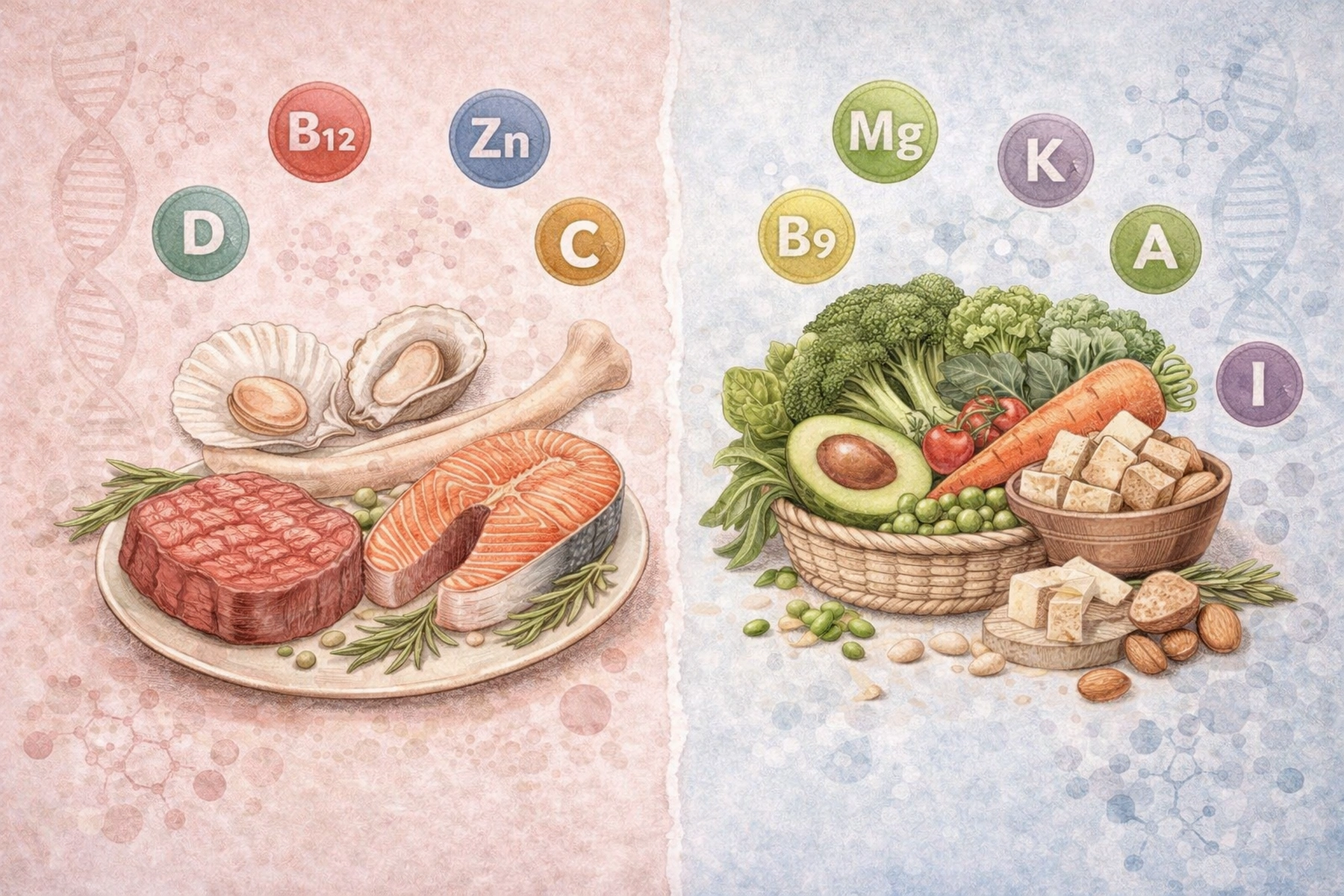
- Plant-based diets are rich in certain micronutrients
- B12 is critical for vegans
- Iron is absorbed less easily from plants
- Zinc and iodine require attention
- Omega-3 DHA/EPA levels are often lower
- Calcium and vitamin D require planning
- Vegetarians manage more easily
- Vegans need more precise planning
- Fortified foods are an important helper
- Supplements are sometimes necessary
- A well-planned diet covers the needs
- Balance is possible even without meat
When people talk about ways of eating and whether it is healthier to eat meat or not, they often mention not only macronutrients such as protein, fats, carbohydrates, and fiber, but also micronutrients. These are the minerals and vitamins that matter for essential processes in our body, such as growth, immune system formation, metabolism, and others.
Just like macronutrients, micronutrients are found in meat and plants in different amounts and concentrations. In this article, we will look at and compare the main minerals and vitamins and their concentration in animal and plant products.
Main vitamins and minerals
The main micronutrients in meat-based and plant-based diets that we will look at are:
Vitamin C
- Plant foods are the main source
- For this reason, vegetarians and especially vegans have the highest intake
Vitamin E
- Found in nuts, seeds, and vegetable oils
- Usually present in higher concentrations in plant-based diets
Folic acid (Vitamin B9)
- Abundant in leafy greens and legumes
- For this reason, vegetarians and especially vegans have the highest intake
Magnesium
- Found in the highest concentrations in spinach, beetroot, sunflower seeds, and black beans
- For this reason, vegetarians and especially vegans have the highest intake
Potassium
- Found in the highest concentrations in spinach, beetroot, potatoes, avocado, and dried figs
- For this reason, vegetarians and especially vegans have the highest intake; I hope you are not tired of reading this yet
Vitamin B12
- It is not found in plants
- Vegans need to take it additionally as a supplement
- Vegetarians can obtain it from eggs, preferably from free-range hens, of course
Selenium (depends on the region)
- Varies depending on soil content.
- Vegans in regions with low selenium content (the United Kingdom, Europe) often have lower levels.
Iron
- Plant-based diets contain non-heme iron, which has lower absorption
- Vegetarians and vegans often have a similar intake, but lower ferritin levels, especially in menstruating women.
Zinc
- It is found in higher concentrations in meat, while in plants phytates (natural compounds in seeds, grains, nuts, and legumes that store phosphorus and minerals, but bind to minerals such as iron, zinc, and calcium, reducing their absorption) can inhibit absorption.
- Vegetarians get enough, but in studies they are closer to the lower limits
Calcium
- Found in meat, fish, and dairy products
- Vegetarians can obtain it from dairy products
- Vegans are advised to obtain it from fortified foods or supplements
Iodine
- Meat/fish are good sources.
- Plant-based diets vary depending on the use of iodized salt and seaweed intake.
- Vegans have higher deficiency rates in several European studies.
Omega-3 fatty acids (DHA/EPA)
- They are not micronutrients, but they matter.
- Plant-based diets contain ALA (from flaxseed, chia, walnuts), but conversion into DHA/EPA is low.
- Vegans have lower plasma DHA/EPA levels unless they take algae-based omega-3 supplements.
For easier comparison, you can look at the following table
Micronutrient | Omnivorous | Vegetarians | Vegans |
Витамин С | Acceptable | Higher | Higher |
Витамин Е | Acceptable | Higher | Higher |
Фолиева киселина ( Витамин B9 ) | Acceptable | Higher | Higher |
Магнезии | Acceptable | Higher | Higher |
Калии | Acceptable | Higher | Higher |
Витамин B12 | High | Ниско | Very low |
Желязо | High | Lower | Lower |
Цинк | High | Lower | Lower |
Калции | High (dairy) | Medium | Lower |
Йод | High | Medium | Lower |
Омега-3 мастни киселини (DHA/EPA) | High (in fish) | Lower | Lower |
Селен (зависи от региона) | High | Medium | Lower |
Strategies
Based on this table and other studies, the following strategies can be developed to help obtain all necessary micronutrients:
If you are vegetarian (consume dairy products/eggs)
The priorities are usually: iron (ferritin), iodine, vitamin D (seasonal), zinc (if intake is low).
- B12: many vegetarians still benefit from fortified foods or low-dose supplements, depending on intake.
- Iodine: use iodized salt regularly or consider supplements if you avoid dairy products.
If you are an evil vegan
These are the most “critical” planning points:
- Vitamin B12: fortified foods and/or supplements are essential.
- Iodine: iodized salt or a supplement (be careful with the variability of seaweed).
- Iron: focus on iron-rich plants (legumes, tofu/tempeh, seeds) + vitamin C with meals; monitor ferritin in higher-risk groups.
- Zinc: prioritize preparation methods that reduce phytate content (soaking/sprouting/fermentation) and zinc-rich foods (legumes, seeds, whole grains); consider monitoring symptoms/risk factors.
- EPA/DHA: consider algae-based DHA/EPA, especially during pregnancy/breastfeeding.
- Calcium/Vitamin D: rely on fortified plant milks/tofu, combined with foods or supplements fortified with calcium and vitamin D where appropriate; vitamin D status depends strongly on sun exposure/geographic latitude/season.
As with macronutrients, it is not impossible to obtain all necessary micronutrients, although a little effort is needed to combine the right ingredients and foods, and in some cases supplements as well (for example, if you are vegan, you need to obtain B12 through supplements). To make your life a little easier, we will show you sample daily menus for vegetarians and vegans that contain the micronutrient amounts you need.
Healthy one-day meal plan — VEGETARIAN
(Includes dairy products and eggs)
Micronutrient goals:
✔ B12
✔ Iron (+ absorption)
✔ Calcium
✔ Vitamin D
✔ Iodine
✔ Zinc
✔ Omega-3 ALA
✔ Folate, magnesium, potassium, fiber
✔ Selenium
Breakfast
Greek yogurt parfait
Ingredients
- 1 cup fortified low-fat Greek yogurt
- ½ cup mixed berries
- 2 tbsp chia seeds
- 1 tbsp ground flaxseed
- ¼ cup walnuts
- A spoonful of honey
Which micronutrients are included here?
- Calcium, iodine, B12, vitamin D (from fortified yogurt)
- Omega-3 ALA (chia + flax)
- Zinc and selenium (walnuts, dairy products)
- Vitamin C, folate (berries)
Small snack between breakfast and lunch (you can simply add it to breakfast or lunch)
- Whole-grain toast + boiled egg
- 1 slice whole-grain bread
- 1 boiled egg
- 1 kiwi
Micronutrients:
- B12 and high-quality protein (egg)
- Iron, magnesium, B vitamins (whole grains)
- Vitamin C (kiwi improves iron absorption)
Lunch
Spinach and lentil salad with quinoa
- 1 cup cooked lentils
- 1 cup raw spinach
- ½ cup cooked quinoa
- ¼ avocado
- 1 tbsp pumpkin seeds
- Lemon + olive oil dressing
Micronutrients:
- Iron + vitamin C combination (spinach + lemon)
- Zinc (pumpkin seeds)
- Complete amino acids (lentils + quinoa)
- Folate, magnesium (spinach, quinoa)
- Healthy fats (olive oil, avocado)
Afternoon snack
Fortified whole-grain cereal bowl
- 1 cup fortified whole-grain cereal
- ¾ cup low-fat milk or fortified plant milk
- 1 banana
Micronutrients:
- B12, vitamin D, iron, zinc (from fortified cereal)
- Potassium (banana)
- Calcium + iodine (dairy milk or fortified plant milk)
Dinner
Vegetarian tofu and vegetable stir-fry
- 150 g firm tofu
- Broccoli, peppers, carrots
- 1 tsp iodized salt (in the whole dish)
- 1 tbsp soy sauce
- 1 serving brown rice
Micronutrients:
- Complete protein (tofu)
- Calcium (if calcium-set tofu is used)
- Iodine (iodized salt)
- Iron and vitamin C (broccoli + peppers)
- Selenium (soy foods)
Results: Contents of the vegetarian plan
This plan provides all micronutrients, including:
- B12: eggs + dairy products + fortified cereal
- Iron: lentils, spinach, tofu, fortified cereal
- Calcium: yogurt + milk + tofu
- Iodine: dairy products + iodized salt
- Vitamin D: fortified dairy products/cereals
- Zinc: pumpkin seeds, tofu, whole grains
- Omega-3: chia, flax, walnuts
Healthy one-day meal plan — EVIL VEGAN
(Excludes all animal products)
Micronutrient goals:
✔ B12 (must come from fortified food or a supplement)
✔ Iron
✔ Calcium
✔ Vitamin D
✔ Iodine
✔ Zinc
✔ Omega-3 ALA
✔ Selenium
✔ Folate, magnesium, potassium, fiber
Breakfast
Smoothie with fortified oat milk
Blend:
- 1 cup fortified oat milk (B12 + D + calcium)
- ½ banana
- 1 cup spinach
- 1 tbsp flaxseed
- 2 tbsp oats
- 1 tbsp almond butter
Micronutrients:
- B12, D and calcium (fortified milk)
- Iron + vitamin C (spinach + fruit)
- Omega-3 ALA (flax)
- Magnesium, zinc (almond butter)
Small snack between breakfast and lunch (you can simply add it to breakfast or lunch)
- 2 Brazil nuts
- 1 orange
Micronutrients:
- Selenium (Brazil nuts — covers the full daily requirement)
- Vitamin C (orange) → increases iron absorption later
Lunch
Chickpea and quinoa bowl
- 1 cup cooked chickpeas
- ½ cup quinoa
- Roasted sweet potato
- Kale
- 1 tbsp tahini
- Lemon juice + iodized salt
Micronutrients:
- Iron + vitamin C (chickpeas + lemon + kale)
- Zinc (chickpeas + tahini)
- Iodine (iodized salt)
- Calcium (kale + tahini)
- Folate + magnesium
Afternoon snack
Fortified nutritional yeast spread
- 2 tbsp nutritional yeast
- On whole-grain crackers
- Apple
Micronutrients:
- B12 energy (nutritional yeast)
- B vitamins
- Iron and zinc (whole grains)
Dinner
Calcium-set tofu stir-fry
- 150 g calcium-set tofu
- Broccoli, bok choy, red peppers
- Brown rice
- 1 tsp iodized salt in the dish
- 1 tbsp hemp seeds sprinkled on top
Micronutrients:
- Calcium (tofu, bok choy, broccoli)
- Iron + vitamin C (broccoli + peppers)
- Zinc (hemp seeds)
- Iodine (iodized salt)
- Omega-3 ALA (hemp seeds)
Before bed (optional)
B12 supplement (if needed)
If the fortified foods above do not provide up to 2–3 µg/day, a small B12 supplement is ideal.
Results: Contents of the vegan plan
This plan covers all key micronutrients, including:
- B12: fortified oat milk + nutritional yeast
- Vitamin D: fortified oat milk
- Calcium: calcium-set tofu + kale + fortified milk
- Iodine: iodized salt
- Iron: chickpeas, tofu, quinoa, kale
- Zinc: chickpeas, tahini, hemp seeds
- Selenium: Brazil nuts
- Omega-3: flax + hemp
- Folate and antioxidants: greens, legumes, vegetables
In conclusion, we can say that it is not impossible to obtain all necessary micronutrients, especially if you are vegetarian. And if you are vegan — do not despair; with more careful planning and effort, you can also obtain everything you need, so you do not tremble when you go for routine blood tests.
Sources
https://higherlogicdownload.s3.amazonaws.com/THEACADEMY/859dd171-3982-43db-8535-56c4fdc42b51/UploadedImages/VN/Documents/Position-of-the-Academy-of-Nutrition-and-Dietetics-Vegetarian-Diets.pdf
https://pubmed.ncbi.nlm.nih.gov/8172124/
https://pmc.ncbi.nlm.nih.gov/articles/PMC6245118/
https://pmc.ncbi.nlm.nih.gov/articles/PMC3967195/
https://pmc.ncbi.nlm.nih.gov/articles/PMC9149309