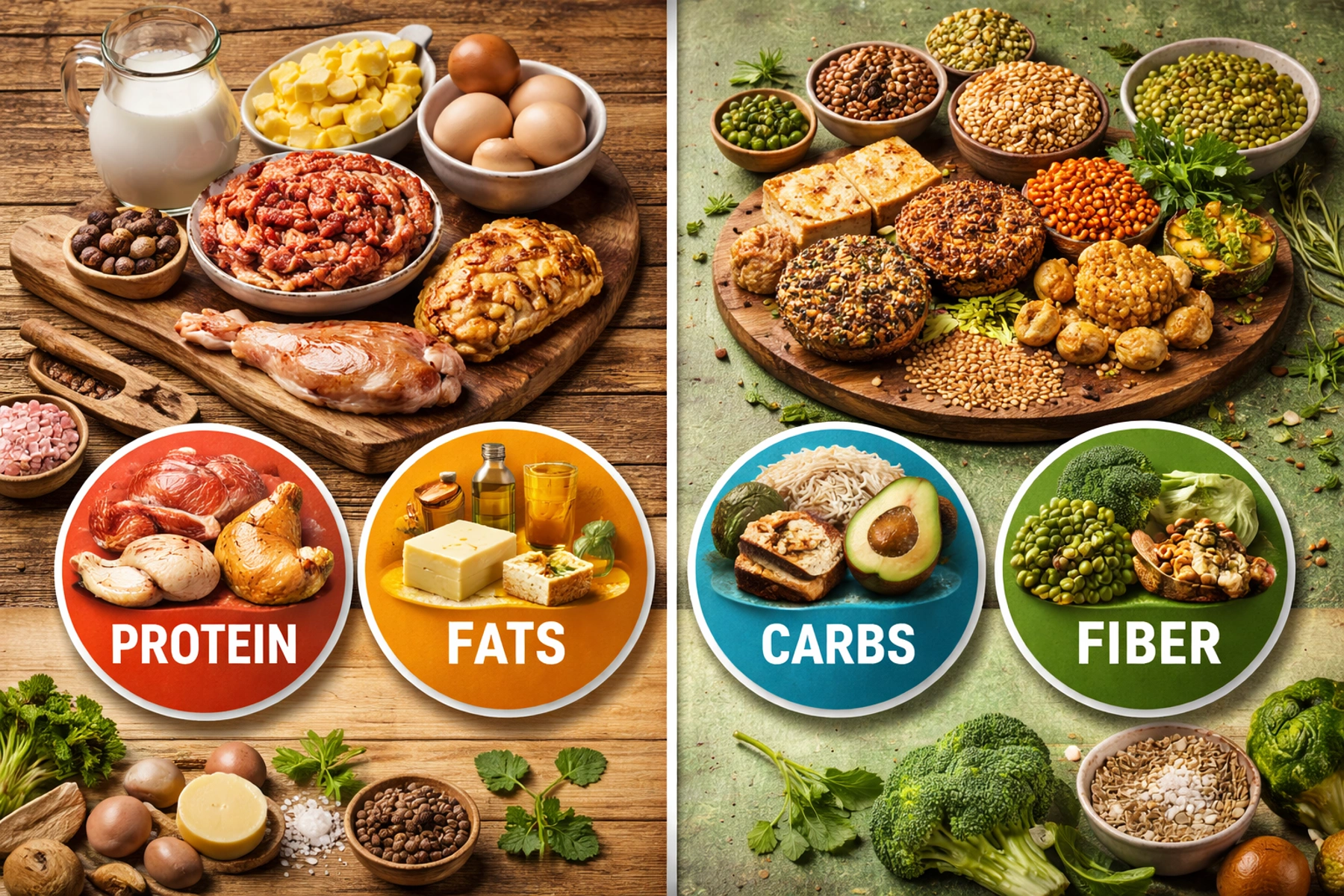
- Meat has working alternatives
- Protein can be obtained without meat
- Whole-food substitutes are the most balanced
- Imitations come close in taste and texture
- Lab-grown meat aims for full similarity
- Fiber is a plus in plant-based options
- Saturated fat is often lower
- Soy provides complete protein
- Satiety can remain the same
- Plant-based options often improve LDL
- The product formula matters more than the label
- Replacing meat is completely achievable
The mission of this site, blog, platform or whatever you would call it is to show us that life and nutrition can exist without meat — or at least without its classic form and origin. We are not claiming to have invented hot water, and we admit without a fight, at least for now, that we borrowed this idea from science, cooking and people with imagination.
And in that spirit, we will show you how far cooking and science have come in finding meat replacements.
The idea is not only to show that such options exist, but also what each one offers and how it compares with the original source of all evil — namely meat. We will look at its macronutrients and compare them with meat substitutes and meat imitations, and we will philosophize a little about whether the whole exercise is worth the effort.
Definitions
To avoid confusion, let us first clearly define the categories:
Meat – conventional animal muscle and fat, and sometimes the occasional bone in sausages and frankfurters — beef, pork, poultry.
Meat substitutes — whole-food based – tofu, tempeh, seitan, legumes.
Meat imitations — processed PBMAs – Beyond, Impossible, pea/soy protein burgers designed to imitate meat.
Cultivated meat – lab-grown animal cells grown in bioreactors.
Average values
Meat
(beef as a reference point)
Average values per 100 g
Макронутриенти | Количество |
Калории | около 250 kcal |
Протеини | 24–26 г |
Общо мазнини | 18–20 г |
Наситени мазнини | 7–9 г |
Въглехидрати | 0 г |
Фибри | 0 г |
Characteristics
- Complete protein — all essential amino acids
- High biological value
- High fat variability depending on the cut
- No fiber
- Zero carbohydrates
Whole-food meat substitutes
(tofu, tempeh, seitan, legumes)
Average values per 100 g
Макронутриенти | Количество (средно на 100 г) |
Калории | 120–200 kcal |
Протеини | 12–25 г |
Общо мазнини | 2–12 г |
Наситени мазнини | 0,3–2 г |
Въглехидрати | 5–20 г |
Фибри | 3–10 г |
Characteristics
- Soy — tofu, tempeh — complete protein
- Seitan — very high protein content, gluten-based
- Legumes — high fiber content
- Lower saturated fat content
- Contain carbohydrates
- Higher micronutrient variability
Meat imitations — PBMAs
Typical values per 100 g
Макронутриенти | Количество |
Калории | 220–270 ккал |
Протеини | 17–22 г |
Общо мазнини | 12–18 г |
Наситени мазнини | 4–7 г |
Въглехидрати | 5–10 г |
Фибри | 3–6 г |
Characteristics
- Designed to imitate beef macronutrients
- Often use pea and rice protein blends
- Added coconut oil, which increases saturated fat
- Higher sodium content — not a macronutrient, but still relevant
- Contain fiber, unlike meat
Cultivated — lab-grown — meat
Estimated values based on research targets — in other words, we are looking into the future.
Target macronutrients per 100 g
Макронутриенти | Количество |
Калории | около 250 kcal |
Протеини | 24–26 г |
Общо мазнини | 18–20 г |
Наситени мазнини | Подобно на конвенционалното месо |
Въглехидрати | 0 г |
Фибри | 0 г |
Characteristics
- Biologically animal muscle tissue
- Designed to reproduce meat macronutrients 1:1
- The fat profile is potentially modifiable
- Commercial data is still limited
In summary, the comparisons look like this:
Вид храна | Протеин | Мазнини | Наситени | Въглехидрати | Фибри | Калории |
Телешко | Високо | Високо | Високо | 0 | 0 | 0 |
Пълнозърнести заместители | Средно–Високо | Средно–Високо | Много ниско | Средно | Високо | Средно |
Имитации на месо | Средно–Високо | Средно | Средно | Средно–Високо | Средно | Сходно с телешкото |
Лабораторно отгледано месо | Високо | Високо | Сходно с телешкото | 0 | 0 | Сходно с телешкото |
Main differences in macronutrients
Protein
- Amount: Can be comparable across all product types we are looking at.
- Quality: Meat and soy are complete.
- Other plant proteins require combination.
Fat
- Meat — high in saturated fat, depending on the cut.
- Imitations often use coconut oil — moderate saturated fat content.
- Plant-based substitutes have the lowest saturated fat content.
Carbohydrates
- Found only in plant foods.
- Meat and cultivated meat = zero.
Fiber
- Only plant-based options contain fiber.
- This is a major structural nutritional difference.
In addition, we will also enlighten you about the metabolic effects according to scientific studies.
Satiety — fullness, hunger and calorie intake.
What increases satiety in plant-based alternatives?
- Fiber + water + food volume — lower energy density — can increase satiety even if protein quality is slightly lower.
What the evidence shows:
- Meat substitutes vs animal meat in real-life conditions: studies in free-living/home settings show that satiety can be similar between plant-based meat substitutes and animal meat in realistic meals — not necessarily “more filling”, but not worse either.
- Mycoprotein — for example Quorn-style products: controlled studies show reduced subsequent energy intake and/or improved appetite compared with chicken at certain doses.
- Beans vs beef: recent clinical research in older adults shows that beans can achieve a level of satiety that does not differ significantly from beef — again: the meal context matters, and hardly anyone eats only beef or only beans.
Ultimately, when it comes to satiety: You do not lose the feeling of fullness and you do not need to swallow the fridge when eating plant-based foods, as long as the meal is well planned in terms of ingredients. Whole-food options — beans, mycoprotein, higher-fiber meals — often perform especially well.
Lipid response — LDL cholesterol + post-meal lipemia.
LDL cholesterol — the bad boy of cholesterol, measured fasting.
The most common signal: replacing animal proteins, especially red/processed meat, with plant proteins leads to a moderate reduction in LDL.
- An AHA systematic review/meta-analysis: replacing animal proteins with plant proteins lowers LDL and related lipid levels.
- Reviews focused on meat imitations similarly report LDL reductions in some replacement contexts, while also noting variability between products and study designs.
Why LDL levels improve:
- More fiber — especially soluble/viscous fiber — which increases bile acid excretion and reduces cholesterol absorption.
- Less saturated fat, often, compared with fatty meats, which lowers LDL.
- Different fat quality — more unsaturated fat when the diet is built that way — helps.
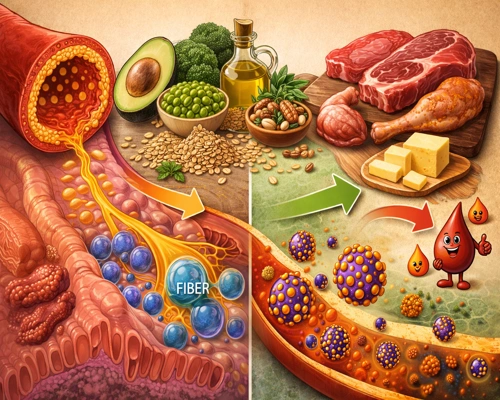
Postprandial lipemia — wow, that sounds complicated — triglycerides after a meal.
- The evidence is more mixed and depends strongly on the type of fat and the total fat load, not only on whether the protein is animal or plant-based.
- A review of controlled studies comparing animal and plant proteins shows that animal proteins often reduce/delay postprandial glycemia and lipemia more than plant proteins, but the results are not consistent across studies.
Practical interpretation: If a PBMA uses a lot of saturated fat, such as coconut oil, and is combined with refined carbohydrates, post-meal lipids may look different from a meal based on beans or tofu — the product formula matters more than the “plant-based” label.
Time for reflection:
From what we have seen in this article, it becomes clear that it is not that complicated to replace meat with whole-food substitutes or with meat imitations, and in the future, why not with meat grown in a biolab without actually taking an animal life. Yes, the last one sounds a little strange, but there is a passenger for every train, as they say.
Each of the two main types of substitutes has its advantages and slight disadvantages, but alas, we do not live in a perfect world. The more curious among you who want to understand how they can apply what they have read here in everyday life can check out our recipes, where they can find meals high in useful macronutrients and options that offer alternatives to common meat dishes.
Sources:
https://pmc.ncbi.nlm.nih.gov/articles/PMC11640312/
https://www.sciencedirect.com/science/article/pii/S0889157525006568
https://pmc.ncbi.nlm.nih.gov/articles/PMC7105824/
https://www.frontiersin.org/journals/nutrition/articles/10.3389/fnut.2025.1641234/full
https://www.mdpi.com/2304-8158/14/21/3674
https://www.mdpi.com/2304-8158/14/13/2312