- Animal welfare can be measured scientifically
- Welfare has physical and mental dimensions
- Health is a core indicator of suffering
- Stress is tracked through physiological markers
- Pain in animals is scientifically established
- Behavior is a key window into welfare
- The absence of natural behavior is a problem
- Stereotypies indicate chronic stress
- The Five Freedoms remain a core framework
- Assessments increasingly focus on the animal itself
- The environment matters, but the response is decisive
- Science helps recognize and reduce suffering
Animal welfare science is a relatively young field, emerging in the late twentieth century when researchers began systematically studying how animals perceive their environment.
Today, the discipline combines insights from veterinary medicine, ethology — the study of animal behavior — physiology and neuroscience in order to understand how farming systems affect animal well-being.
Instead of relying only on moral arguments, animal welfare science attempts to measure welfare using observable biological indicators. These include physical health, behavioral patterns and physiological stress responses.
International organizations such as the World Organisation for Animal Health, and research summarized by groups such as Compassion in World Farming, describe animal welfare as a state that reflects how animals cope with the conditions in which they live.
Understanding these scientific indicators is essential for assessing the welfare impact of modern animal farming systems.
What is animal welfare?
The concept of animal welfare has developed significantly over time. Early debates focused mainly on physical suffering, but modern welfare science recognizes that well-being has multiple dimensions.
The World Organisation for Animal Health defines animal welfare as:
The physical and mental state of an animal in relation to the conditions in which it lives and dies.
This definition emphasizes that welfare includes not only health and survival, but also emotional and behavioral experiences.
In practice, scientists usually assess welfare using three broad categories:
- Physical health and biological functioning
- Affective states — pain, stress, emotions
- The ability to express natural behavior
Together, these categories form the foundation of modern welfare assessments.
Physical health and biological functioning
One of the clearest indicators of welfare is physical health.
Animals suffering from disease, injury or physiological dysfunction are generally considered to have poor welfare. For this reason, researchers monitor several health indicators when evaluating farming systems.
Common examples include:
- lameness in cattle and broilers
- mastitis in dairy cows
- respiratory disease in pigs and poultry
- skin lesions and injuries caused by aggression
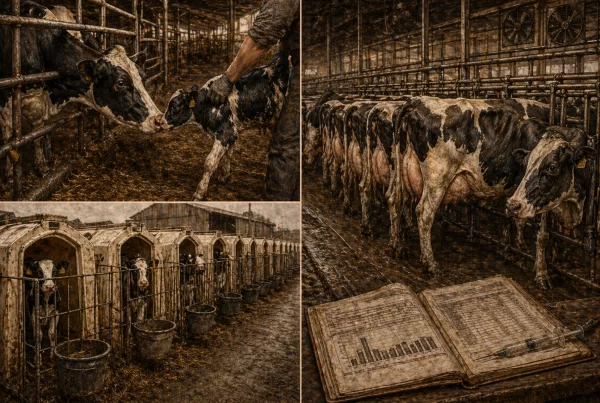
For example, lameness is considered one of the most serious welfare problems in dairy farming. Lame cows often experience chronic pain and reduced mobility, which affects both their health and behavior.
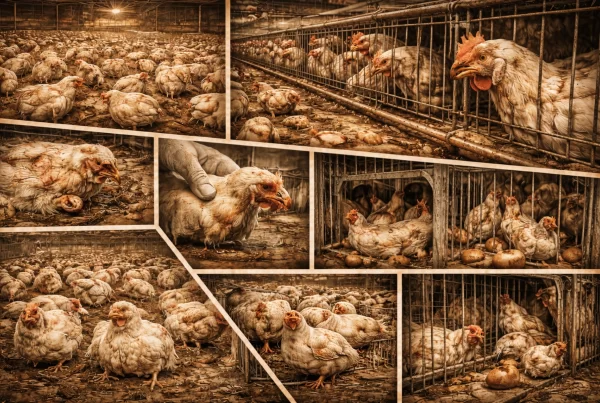
Similarly, broilers bred for rapid growth often develop skeletal disorders that impair walking.
Health indicators are valuable because they provide objective, measurable data about the animal’s physical condition.
Physical health alone, however, does not capture the full picture of animal welfare.
Stress physiology
Animals respond to environmental challenges through physiological stress responses. While short-term stress can be adaptive, chronic stress can harm health and welfare.
Scientists often measure stress using indicators such as:
- cortisol levels in blood or saliva
- heart rate and blood pressure
- suppression of the immune system
Elevated cortisol levels may indicate that an animal is experiencing prolonged stress due to factors such as overcrowding, social conflict or environmental discomfort.
For example:
- pigs transported to slaughter show significant increases in cortisol levels
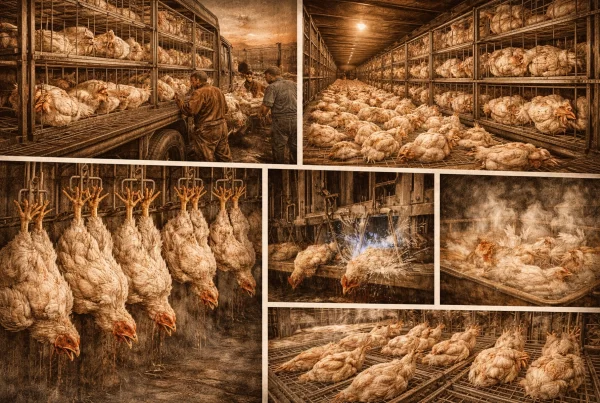
- poultry exposed to high temperatures show physiological stress responses
- cattle subjected to rough handling show increased heart rate
These physiological measurements help researchers identify situations that may cause suffering, even when visible injuries are absent.
Pain and nociception
One of the most important questions in animal welfare science is whether animals experience pain and suffering.
Modern neuroscience strongly supports the conclusion that vertebrate animals — including mammals and birds — possess neurological structures capable of processing pain.
Researchers study pain using several indicators:
- vocalizations
- withdrawal responses
- changes in behavior
- physiological stress signals
Pain research has revealed that many routine farming procedures cause significant suffering. For example:
- castration of piglets produces intense vocalizations and stress responses
- tail docking causes acute pain, followed by possible chronic nerve damage
- lameness in dairy cows leads to behavioral signs consistent with persistent pain
- recognition of these responses has led to stronger calls for pain relief, including the use of anesthesia or analgesics during certain procedures.
Behavior as an indicator of welfare
Behavior provides one of the most powerful tools for assessing animal welfare.
Animals have evolved to perform specific behaviors that are important for survival and well-being. When the environment prevents these behaviors, welfare problems can arise.
Examples of natural behavior include:
- dust bathing in chickens
- rooting and exploration in pigs
- grazing in cattle
When animals cannot perform these behaviors, they may develop abnormal behaviors known as stereotypies.
Common stereotypic behaviors include:
- bar biting in pigs
- repetitive pacing in confined animals
- excessive feather pecking in poultry
These behaviors are often interpreted as signs of frustration or chronic stress.
Providing opportunities for natural behavior — through enrichment or improved housing conditions — is therefore an important goal of welfare-oriented farming systems.
The Five Freedoms framework
One of the most influential frameworks in animal welfare is the “Five Freedoms,” originally developed in the United Kingdom.
The Five Freedoms state that animals should have:
- Freedom from hunger and thirst
- Freedom from discomfort
- Freedom from pain, injury or disease
- Freedom to express normal behavior
- Freedom from fear and distress
Although they were originally designed as guiding principles rather than strict scientific measures, the Five Freedoms have shaped animal welfare policy and research around the world.
Many certification systems and animal welfare guidelines still rely on this framework when evaluating farming systems.
From resource-based measures to animal-based measures
Historically, welfare assessments focused on resource-based measures, such as:
- cage size
- ventilation quality
- food availability
Although these factors are important, researchers increasingly emphasize animal-based measures that assess the actual condition of the animal.
Examples include:
- body condition scoring
- injury prevalence
- behavioral observations
- physiological stress markers
This shift reflects a key insight: the true indicator of welfare is not the environment itself, but how the animal responds to that environment.
Animal welfare science provides a framework for assessing how farming systems affect animals using measurable biological indicators. By examining physical health, stress physiology, pain responses and behavior, researchers can identify conditions that promote or harm animal welfare.
This scientific approach does not resolve all ethical questions about the use of animals in agriculture. It does, however, provide essential tools for understanding how animals experience their living conditions and for identifying ways to reduce suffering.
As the field develops, animal welfare science will play a decisive role in shaping the future of animal farming, food systems and human society’s relationship with animals.
Sources:
https://www.woah.org/fileadmin/Home/eng/Health_standards/tahc/current/chapitre_aw_introduction.pdf
https://www.ciwf.org.uk/research/
https://doi.org/10.1002/9781444302622
https://doi.org/10.1079/9781780645391.0000
https://doi.org/10.1093/acprof:oso/9780199573233.001.0001
https://doi.org/10.1098/rstb.2013.0229
https://www.cabi.org/bookshop/book/9780851993591/
https://www.gov.uk/government/publications/fawc-advice-on-the-welfare-of-livestock