- Endurance requires more carbohydrates
- Women have specific needs in endurance training
- LEA is a key risk for active women
- The cycle affects fuel needs
- Digestive comfort is very important
- The omnivorous diet is the easiest to cover the needs
- The vegetarian diet is a good compromise
- The vegan diet requires the most planning
- Iron requires more attention
- Hydration and electrolytes are important
- Carbohydrate loading is crucial
- A good plan supports all three diets
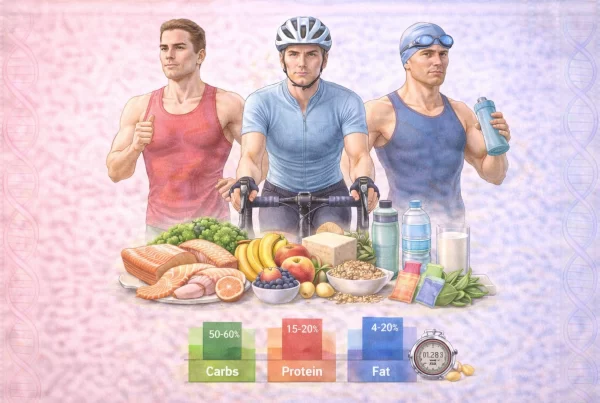
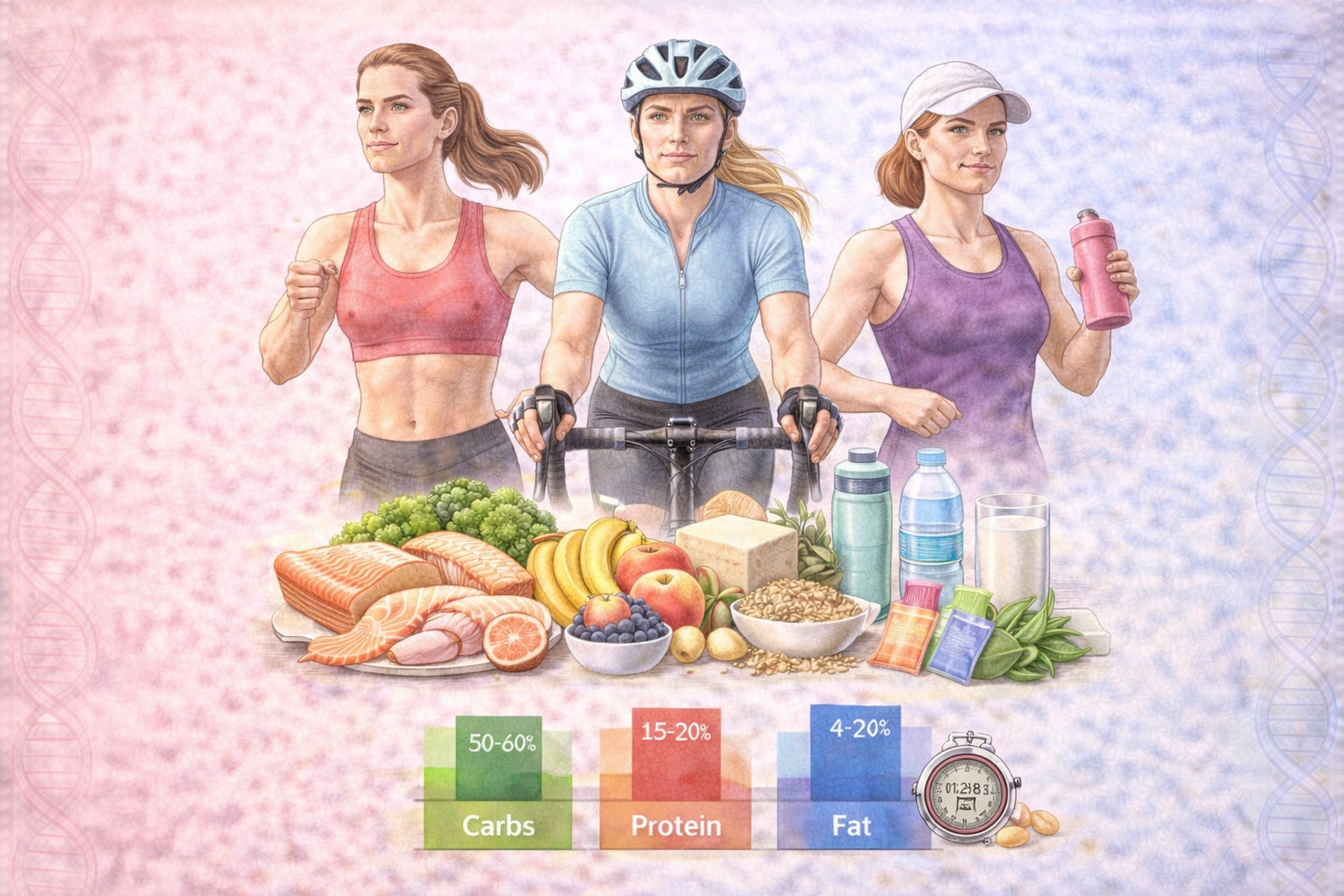
In this article, we will once again talk about nutrition and training for women, but this time we will change direction. We will not look at what is needed to successfully fight gravity and build muscle and mass, but will instead focus on nutrition for endurance training — cycling, running, triathlons, and all the other ways to sweat while trying to melt belly fat or run a marathon.
The main aspects we will look at are the following:
- Macro needs for women training for endurance.
- We will compare eating patterns: omnivorous versus vegetarian versus vegan.
- We will look at women-specific considerations: hormones, cycle phase, LEA, and digestive-system load.
- And we will prepare a complete one-day endurance fueling plan for EACH type of diet — omnivorous, vegetarian, vegan — tailored to a 60 kg woman training for endurance.
Macronutrient needs for women training endurance (60 kg)
Compared with strength training, endurance requirements involve:
✔ Higher carbohydrate needs
✔ Slightly lower protein needs
✔ Greater focus on electrolytes and hydration
✔ Greater emphasis on gastrointestinal comfort
✔ Careful management of LEA, as women are at the highest risk
Daily macro goals for a 60 kg endurance-training woman
Macronutrient | Goal |
Carbohydrates | 5–8 g/kg → 300–480 g/day (can go up to 8–10 g/kg on days when you do very long cardio) |
Proteins | 1.2–1.6 g/kg → 72–96 g/day |
Fats | 1.0–1.2 g/kg → 60–72 g/day |
Calories | between 2200–2700 calories (higher for long sessions) |
Key women-specific factors
Women in endurance sports need:
- More carbohydrates during the follicular phase, when carbohydrate oxidation is better
- More fats and protein during the luteal phase, when fat oxidation and energy expenditure are higher
- Very careful attention to LEA, low energy availability
- Lower digestive-system load before running, especially for vegan athletes, because of fiber sensitivity
The first eating pattern we will show is the one followed by the “bad” people, namely the meat-eating diet.
Pros
✔ The easiest diet for meeting high carbohydrate needs
✔ High-quality protein with low volume
✔ Low load on the digestive system, therefore better digestion before running
✔ Easy maintenance of iron levels
✔ High glycogen storage capacity
Cons
- Risk of too much saturated fat if poorly balanced
- Some women struggle with dairy products before running
Meeting nutritional needs (Ease of reaching the required values)
Protein ⭐⭐⭐⭐⭐⭐
Carbohydrates ⭐⭐⭐⭐⭐
Fats ⭐⭐⭐⭐⭐⭐
Digestive comfort ⭐⭐⭐⭐⭐
Iron ⭐⭐⭐⭐⭐⭐
Vegetarian endurance diet for women
Pros
✔ Dairy products and eggs = great protein options before running
✔ Easy carbohydrate loading
✔ Moderate GI load
Cons
- Lower iron absorption, which creates risks for menstruating women
- Dairy products may cause digestive-system issues during long training sessions for some athletes
Meeting nutritional needs (Ease)
Protein ⭐⭐⭐⭐
Carbohydrates ⭐⭐⭐⭐⭐
Fats ⭐⭐⭐⭐
Digestive comfort ⭐⭐⭐⭐
Iron ⭐⭐⭐
And now it is time for the evil vegans
Vegan endurance diet for women
Pros
✔ Naturally high carbohydrate intake
✔ Anti-inflammatory properties that are useful for recovery
✔ Excellent micronutrient density
Cons
- Highest gastrointestinal load because of fiber
- Plant protein before running can cause bloating
- Lower iron, B12, iodine, and DHA content → more care is needed
- The risk of LEA is the highest, because satiety can lead to low calorie intake
Meeting nutritional needs (Ease)
Protein ⭐⭐⭐
Carbohydrates ⭐⭐⭐⭐⭐
Fats ⭐⭐⭐⭐
Digestive comfort ⭐⭐
Iron ⭐⭐
Meal plans
As in the other articles that look at nutrition for men and women, we will show a sample comparison of the three diets. The goal is to demonstrate how an omnivorous diet could be imitated and replaced with a vegetarian or vegan one.
The daily plans shown for a 60 kg woman are for a typical endurance training day, or in other words, running without anyone chasing us:
60–90 minutes of moderate endurance OR a long run/cycle of 1.5–2.5 hours
Target macronutrients:
✔ 300–350 g carbohydrates
✔ 80–90 g protein
✔ 60–70 g fats
✔ around 2300–2500 kcal
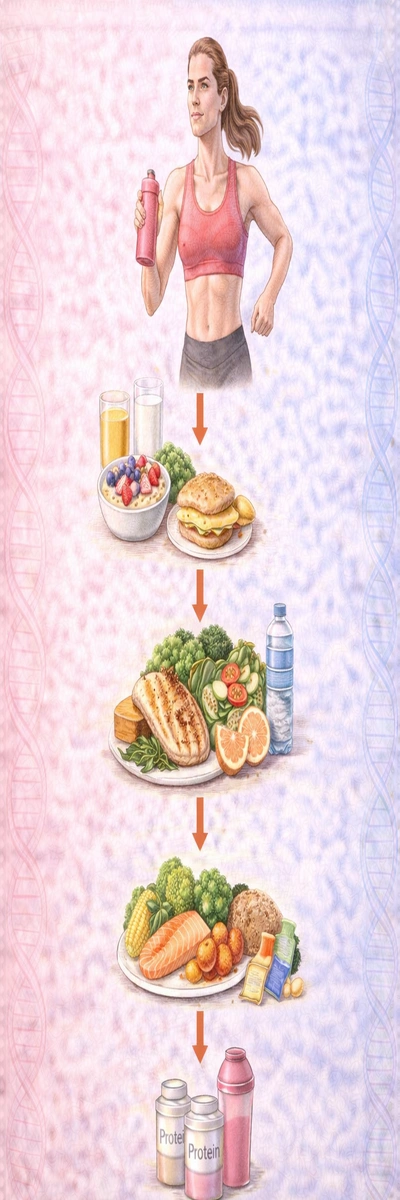
Daily plan for an omnivorous woman training for endurance
Calorie target to reach around 2400 kcal
Carbohydrates around 330 g | Protein around 90 g | Fats around 70 g
Breakfast — Before training (around 550 kcal)
Low-fiber, carbohydrate-rich meal
- 1.5 cups cooked oats
- 1 banana
- 1 tbsp honey
- 2 eggs, or a small omelet
Macronutrients:
around 20 g protein / around 90 g carbohydrates / around 12 g fat
During training (around 150–250 kcal)
For sessions >75 minutes:
- 30–60 g carbohydrates/hour, for example sports drink, gels, or banana
Post-workout meal (~600 kcal)
- Chicken + rice recovery bowl
- 100–120 g grilled chicken
- 1 cup white rice
- 1 cup cooked vegetables
- 1 tbsp olive oil
- ½ cup pineapple, for glycogen recovery
Macronutrients:
around 35 g protein / around 90 g carbohydrates / around 15 g fat
Lunch (around 500 kcal)
Turkey sandwich
- Whole-grain bread
- 90 g turkey meat
- Vegetables
- 1 slice cheese
- 1 piece of fruit
Macronutrients:
around 30 g protein / around 60 g carbohydrates / around 14 g fat
Dinner (around 600–700 kcal)
Salmon + potatoes
- 120 g salmon
- 250–300 g roasted potatoes
- Olive oil
Macronutrients:
around 30 g protein / around 80 g carbohydrates / around 25 g fat
Daily plan for a vegetarian woman training for endurance
Calorie target to reach: around 2350 kcal
Carbohydrates around 320 g | Protein around 85–95 g | Fats around 60 g
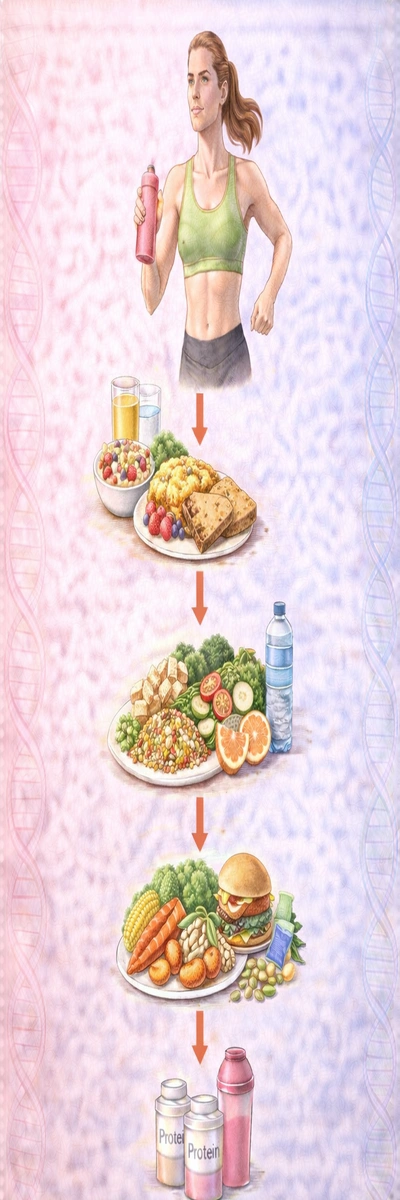
Breakfast — Before running (around 500 kcal)
Yogurt with extra carbohydrates
- 1 cup Greek yogurt
- 1 cup granola or oats
- 1 banana
- A small spoonful of honey
Macronutrients:
around 30 g protein / around 90 g carbohydrates / around 8 g fat
During training (around 150–250 kcal)
30–60 g carbohydrates/hour
Post-workout meal (around 550 kcal)
Egg and quinoa bowl
- 2 eggs + 2 egg whites
- 1 cup cooked quinoa
- Spinach
- Fruit as dessert
Macronutrients:
around 35 g protein / around 70 g carbohydrates / around 15 g fat
Lunch (500 kcal)
Vegetarian sandwich
- Whole-grain bread
- Cheese OR cottage cheese
- Tomato, lettuce
- Fruit for dessert
Macronutrients:
around 25 g protein / around 55 g carbohydrates / around 12 g fat
Dinner (around 700 kcal)
Lentil pasta plate
- 1.5 cups lentil pasta
- Tomato sauce
- Parmesan
- Vegetables
Macronutrients:
around 35 g protein / around 100 g carbohydrates / around 15 g fat
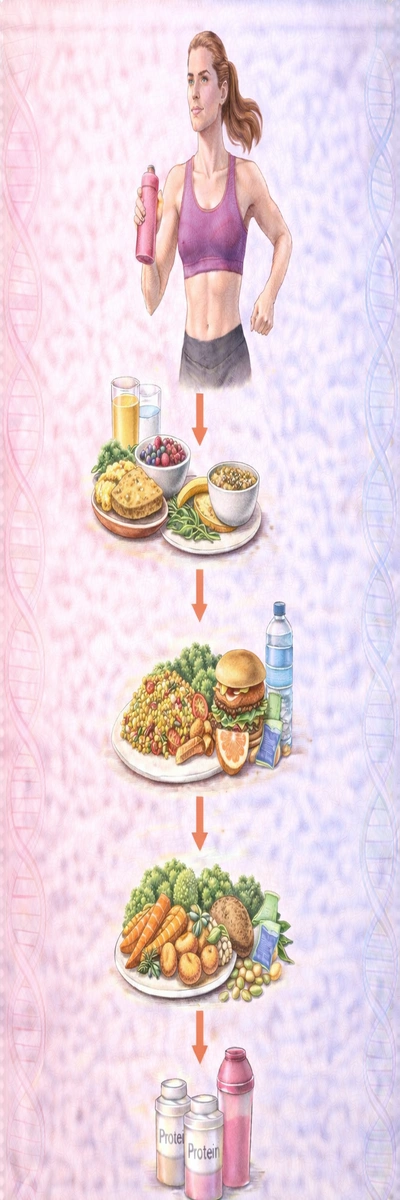
Daily plan for an evil vegan woman training for endurance
Calorie target to reach around 2450 kcal
Carbohydrates around 340 g | Protein around 90 g | Fats around 60 g
Designed to keep fiber intake moderate, which is very important for female endurance athletes.
Breakfast — Before training (around 500 kcal)
Low-fiber vegan smoothie
- 1 scoop soy isolate
- 1 banana
- ½ cup oats
- 300 ml soy milk
- 1 tbsp maple syrup
Macronutrients:
around 35 g protein / around 80 g carbohydrates / around 8 g fat
(Low fiber → comfortable running)
During training (around 150–250 kcal)
Gels, chewable tablets, or glucose drinks
(Vegan options: GU gels, Clif gels, Skratch)
Post-workout meal (around 600 kcal)
Tofu rice bowl
- 150 g tofu
- 1 cup white rice
- Cooked vegetables
- 1 tbsp soy sauce + sesame oil
- ½ cup pineapple
Macronutrients:
around 35 g protein / around 90 g carbohydrates / around 15 g fat
Lunch (around 500 kcal)
Hummus and sandwich combination, lower-fiber version
- 2 slices bread
- Hummus
- Avocado
- Tomato
- Fruit for dessert
Macronutrients:
around 18 g protein / around 60 g carbohydrates / around 15 g fat
Dinner (around 700 kcal)
Seitan pasta
- 150 g seitan
- 2 cups pasta
- Nutritional yeast
- Marinara
Macronutrients:
around 35 g protein / around 100 g carbohydrates / around 12 g fat
Sources:
https://pubmed.ncbi.nlm.nih.gov/28642676/
https://link.springer.com/article/10.1186/s12970-018-0242-y
https://www.tandfonline.com/doi/full/10.1186/s12970-017-0174-y
https://pubmed.ncbi.nlm.nih.gov/28630601/
https://pubmed.ncbi.nlm.nih.gov/27886704/
https://www.sciencedirect.com/science/article/abs/pii/S0899900725000607
https://pmc.ncbi.nlm.nih.gov/articles/PMC12586379/
https://www.mdpi.com/2072-6643/17/15/2571