- Alternative proteins can create jobs
- Manufacturing and logistics are growing fastest
- Losses will mainly occur in the meat sector
- The transition requires new skills
- Skills mismatch is a major risk
- Retraining is a key factor
- Some skills are transferable
- Livestock farmers are the most vulnerable group
- Biotechnology opens new positions
- The new roles are more skilled
- Better jobs do not come automatically
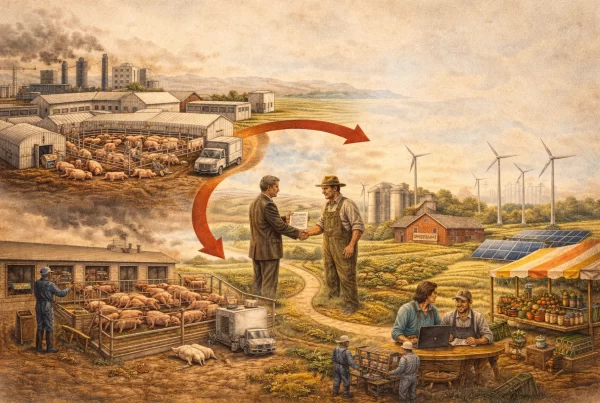
- Success depends on a managed transition
Expectations
Industries producing meat substitutes, whether plant-based or cultivated meat products — grown in laboratories — are developing rapidly. According to a multi-regional study carried out by experts in Brazil, the USA and Europe, published by GAIA, alternative proteins could capture up to 60% of the meat market by 2040. This raises a key question:
Will alternative proteins create jobs — or destroy them?
Surprisingly, the expert consensus is clear: net job creation is likely — but only if countries properly manage the skills transition and regional strategies.
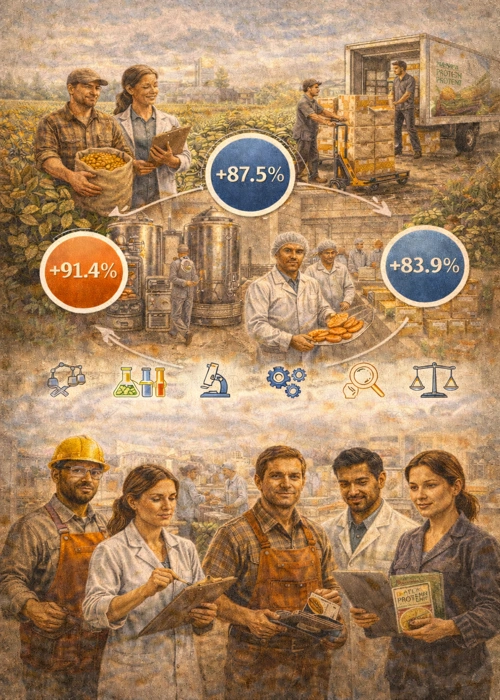
Experts expect job growth across the alternative protein value chain
- 87.5% expect new jobs in inputs/ingredients
- 91.4% expect new jobs in manufacturing
- 83.9% expect new jobs in distribution/logistics
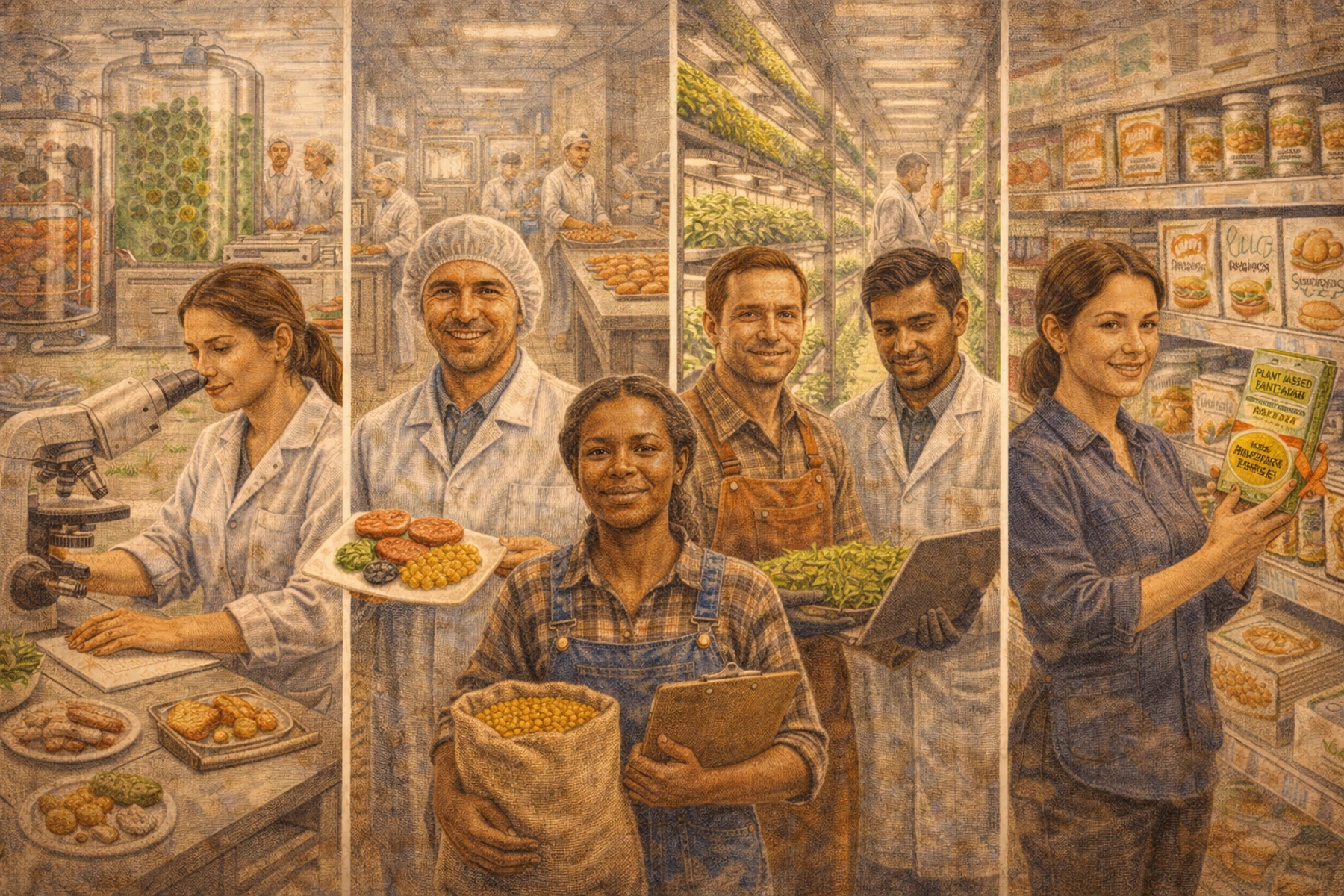
Alternative proteins are technology-heavy and process-heavy sectors with strong demand for:
- Engineering
- Bioprocessing
- food science
- manufacturing
- quality control
- regulatory compliance
These are generally higher-skilled and better-paid jobs.
Trends
Where job losses arise
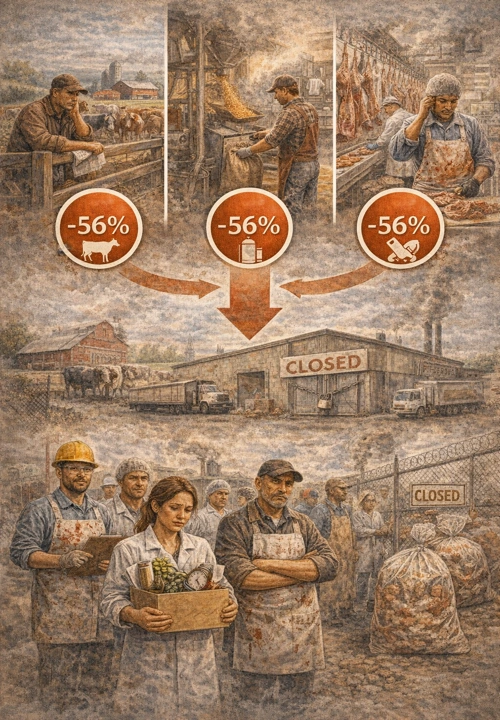
The impacts are concentrated in:
- livestock farming
- feed production
- slaughter and meat processing
~56% of experts predict net job losses in the conventional meat-processing chain if plant-based and cultivated products reach scale.
Reasons:
- reduced livestock volumes
- reduced demand for feed
- closure/consolidation of slaughter facilities
- technological efficiency
A challenge we may not have thought about is how to move — not simply replace — the lost workforce.
The skills mismatch problem
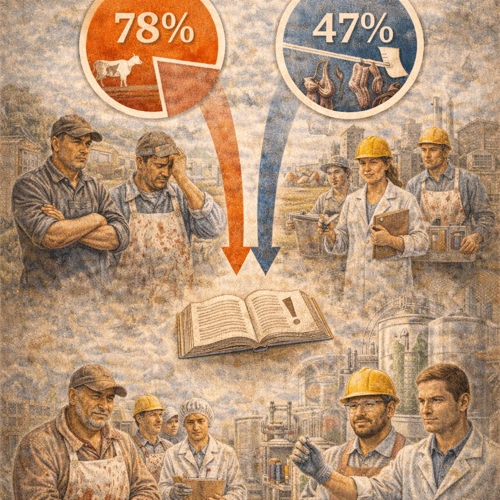
Experts are unanimous:
- 78%: livestock workers do not have the qualifications needed for alternative-protein jobs
- 47%: downstream meat-processing workers have some transferable skills
- Engineering and biotechnology positions require more advanced training
This mismatch makes retraining and reskilling the most important policy lever.
Which workers are best suited for transition?
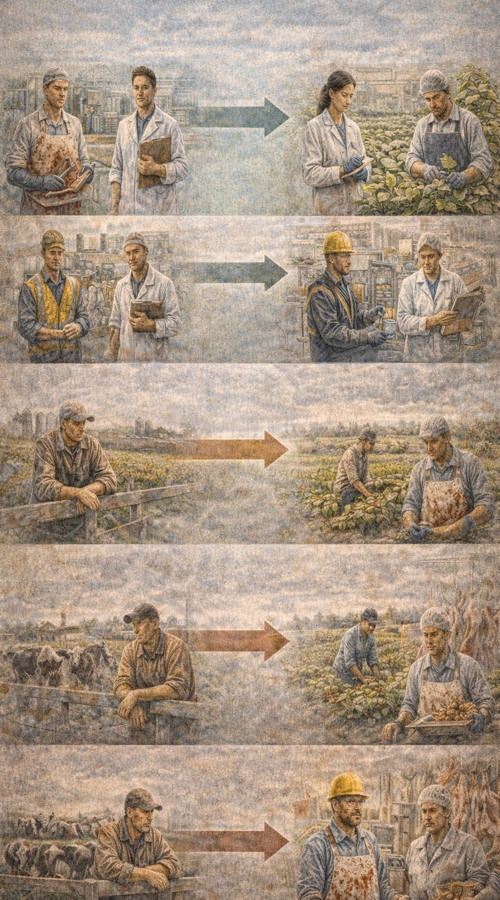
High convertibility
- Meat-processing workers could find roles in plant-based manufacturing
- Quality-control staff could move into food safety
- warehouse/logistics workers could move into cold chain and distribution
- maintenance technicians → automated production operations
Medium convertibility
- feed crop farmers → legumes for human food
- mixed farmers → diversified crops
Low convertibility
- farmers working only in livestock farming
- slaughter specialists
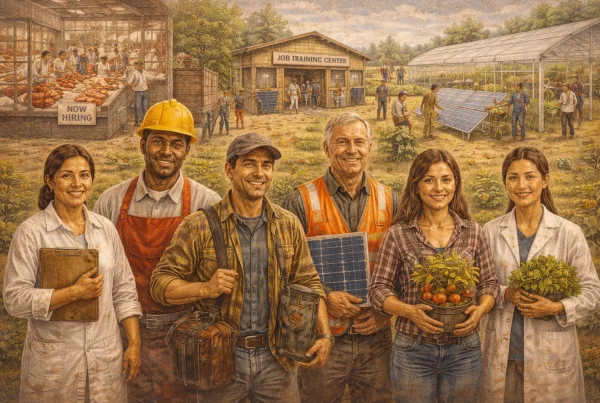
These people require structured support: diversification grants, buyouts and retraining.
New high-growth job clusters
1) Research and Development and bioprocessing
Bioreactor operation, growth-media development, tissue engineering.
2) Manufacturing and automation
Extrusion, mixing, fermentation, robotics, utilities.
3) Ingredient production
Protein extraction, milling, oil/fibre processing.
4) Regulation and safety
Approval, certification, documentation of novel foods.
These sectors offer higher job quality than conventional meat.

Alternative proteins can be a path toward better jobs, higher wages and safer work — but only if the transition is managed. Countries that invest early in skills, training and regional infrastructure will reap the benefits; those that leave workers behind will face instability and backlash.
Sources:
https://gaia2030.org/publications/expected-impact-of-cultivated-meat-and-plant-based-alternatives-on-jobs-brazil-us-eu.pdf
https://www.ox.ac.uk/news/2025-11-04-global-shift-towards-plant-based-diets-could-reshape-farming-jobs-and-reduce-labour
https://globalforestcoalition.org/wp-content/uploads/2024/12/A-Just-Transition-Industrial-Animal-Agriculture-White-Paper-English-FINAL.pdf
https://www.sei.org/projects/just-transitions-animal-agriculture/
https://www.sei.org/publications/just-transition-meat-sector/