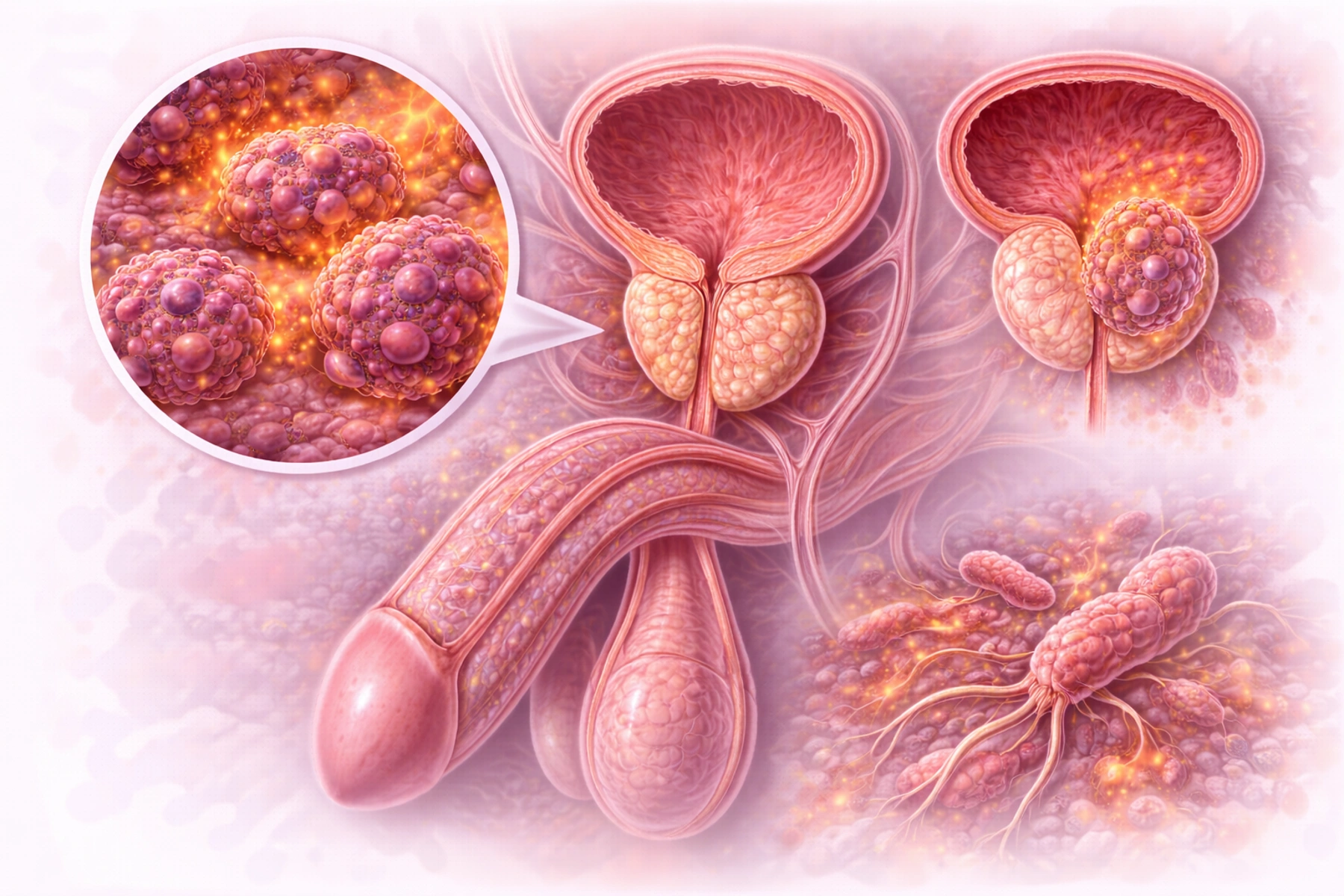
- Prostate cancer depends on many factors
- Age and genetics are leading risks
- Meat has the strongest effect in advanced risk
- Charred and processed meat are the most problematic
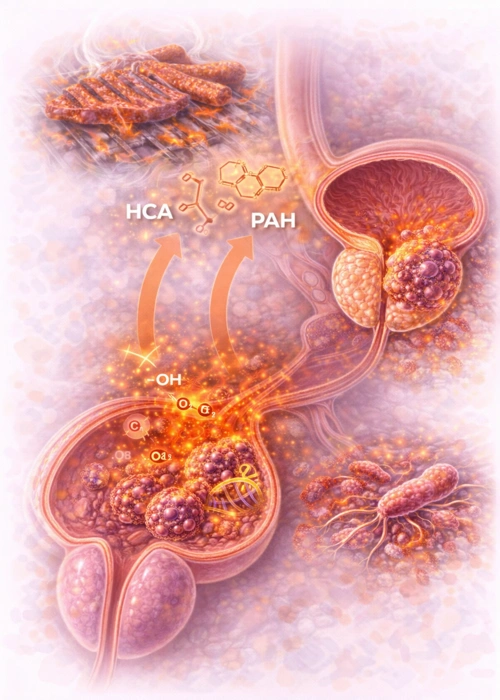
- HCAs and PAHs damage prostate tissue
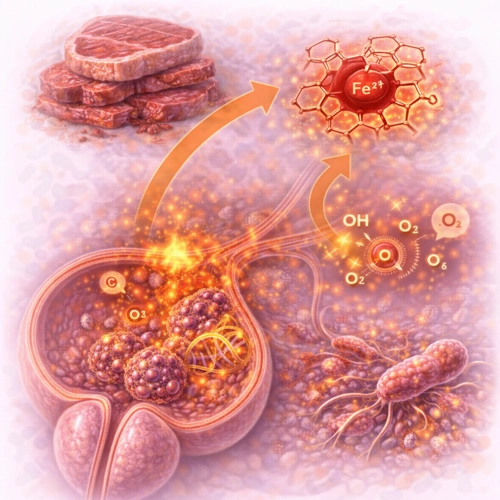
- Heme iron increases oxidative stress
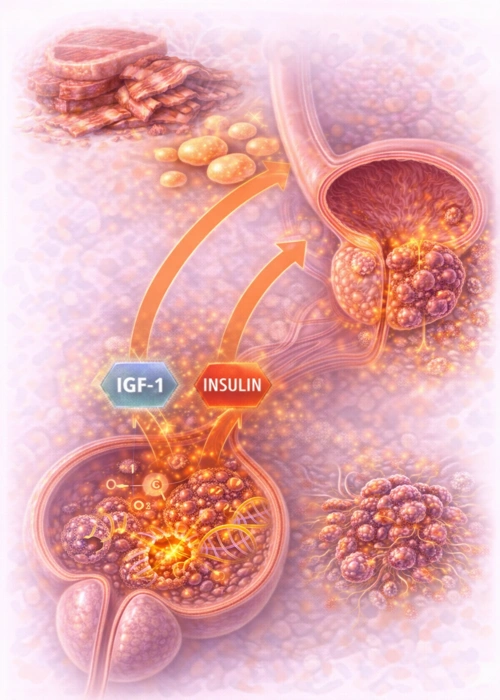
- Saturated fat and IGF-1 support growth
- Inflammation also plays a role
- Safer cooking reduces the risk
- Tomatoes and cruciferous vegetables are protective
- Weight and movement matter
- Prevention also depends on nutrition
Even if a person lives well, at some point they have to leave this world. There is probably no particularly pleasant way for this to happen, but there are certainly many unpleasant ones, and cancer is definitely one of them. Unfortunately, there are many different types of cancer, and they develop as a result of different causes. In this article, we will look at a cancer that concerns men, namely prostate cancer.
We will examine what it is, why and how it occurs, how nutrition affects it, and what we can do to reduce the chances of developing this disease.
What is prostate cancer?
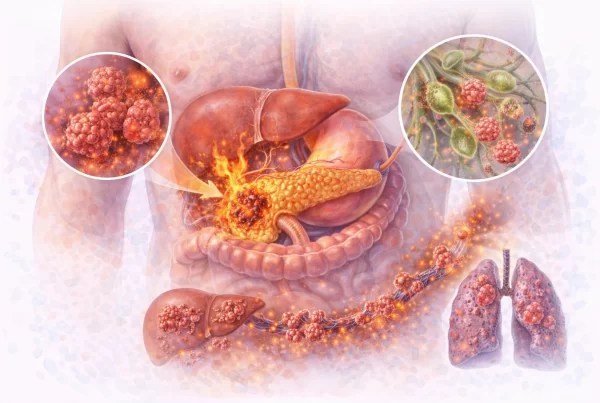
Prostate cancer is a malignant disease that develops in the prostate gland, a small gland below the bladder that produces seminal fluid.
Most prostate cancers are adenocarcinomas, originating from glandular epithelial cells.
Main characteristics:
- It often grows slowly in the beginning
- It can remain asymptomatic for years
- In advanced stages, it can invade nearby tissues (seminal vesicles, bladder) and metastasize to bones and lymph nodes
- Hormones – especially androgens (testosterone, DHT) – play a major role in tumor growth
Because prostate cancer ranges from slow-progressing to aggressive, both environment and genetics influence its progression.
Causes and main risk factors
Prostate cancer is influenced by a combination of genetic, hormonal, environmental, and dietary factors.
A) Established risk factors
- Age (the biggest risk)
- Family history and genetics (BRCA1/2, HOXB13 mutations)
- African ancestry
- Hormonal environment (higher androgen activity)
B) Lifestyle and nutrition-related factors
These factors are considered modifiers rather than primary drivers:
- High intake of red and processed meat
- High-fat diets (especially saturated fat)
- Low intake of fruits/vegetables
- Obesity (especially abdominal)
- Low physical activity
C) Inflammation
Chronic inflammation of prostate tissue is believed to initiate DNA damage and tumor development.
Why and how does meat consumption affect prostate cancer risk?
The link between meat and prostate cancer is weaker than in colon cancer, but many scientific studies show suggestive or limited evidence of increased risk, especially for:
- Advanced prostate cancer
- Fatal prostate cancer
- High intake of processed or charred meat
Mechanistically, prostate tissue is influenced by hormones, oxidative stress, inflammation, and IGF-1 signaling — all affected by diets high in meat.
Mechanism 1
Carcinogens from high-temperature cooking (HCAs and PAHs)
Frying, grilling, and barbecuing meat produce:
- HCAs (heterocyclic amines)
- PAHs (polycyclic aromatic hydrocarbons)
Studies show:
- These carcinogens accumulate in prostate tissue
- They form DNA adducts
- They trigger inflammation and mutations
High intake of fried or charred red meat is the strongest meat-related dietary pattern associated with prostate cancer progression.
Mechanism 2
Heme iron → oxidative stress
Red meat contains heme iron, which:
- Stimulates the formation of free radicals
- Damages the DNA of the prostate epithelium
- Increases oxidative stress and inflammatory signaling
- Supports conditions favorable to tumor initiation
Prostate cells are highly sensitive to oxidative damage, which makes heme iron a plausible factor.
Mechanism 3
Saturated fat and IGF-1 activation
Diets high in red/processed meat often have:
- Higher saturated fat content
- Higher calorie density
- Higher insulin and IGF-1 levels
IGF-1 (insulin-like growth factor) promotes:
- Cell proliferation
- Inhibition of apoptosis (said more simply, reduced cell death. In fact, cancer formations are cells that stubbornly refuse to die)
- Faster tumor growth
- Greater metastatic potential
Elevated IGF-1 levels correspond to a higher risk of advanced prostate cancer.
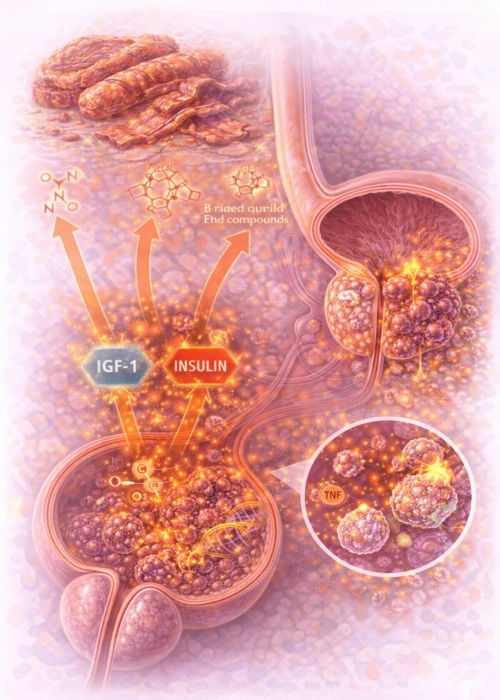
Mechanism 4
Chronic inflammation
Processed meats contain:
- Nitrites
- Nitrates
- Advanced glycation end products
- Pro-inflammatory compounds from frying and grilling
They promote:
- Early stages of systemic inflammation
- Oxidative stress
- Potential inflammatory changes in the prostate microenvironment
- Faster progression of existing tumors
Although inflammation is not as central in prostate cancer as it is in colorectal cancer, it still plays a measurable role.
Ideas for prevention and risk reduction
A) Limit processed and charred red meat
To reduce prostate cancer risk:
- Avoid fried, barbecue, and charred meats
- Reduce processed meats (sausages, bacon, salami)
- Reduce the frequency of high-temperature cooking
B) Focus on healthier cooking methods
Choose:
- Steaming
- Poaching
- Baking
- Slow cooking
These methods reduce HCA/PAH formation by up to 80–90%.
C) Reduce total red meat intake – we may have already told you this
Limiting red meat to 2–3 servings/week can reduce oxidative and hormonal load.
D) Increase intake of protective foods
Strongly protective for prostate tissue:
- Tomatoes (lycopene)
- Cruciferous vegetables (broccoli, kale, cauliflower → sulforaphane)
- Soy foods (isoflavones)
- Green tea (EGCG)
- Foods rich in omega-3 fatty acids (flax, chia, walnuts)
They reduce inflammation, oxidation, and IGF-1 signaling.
E) Maintain a healthy weight and exercise
Obesity and metabolic syndrome:
- Increase the risk of aggressive prostate cancer
- Raise IGF-1 and insulin
- Increase inflammation and androgen activity
- Physical exercise reduces risk by 10–20%, especially in aggressive forms.
F) Reduce dairy products and saturated fat
This is not directly related to meat, but it is relevant:
- High intake of dairy products and saturated fat correlates with more advanced disease
- Mechanism: increased IGF-1 + hormonal effects
Brief summary of what was written in the article:
What it is:
Prostate cancer forms in the prostate gland and is influenced by age, genetics, hormones, and environmental factors.
How meat contributes:
Meat – especially processed and heat-treated red meats – introduces carcinogens (HCAs, PAHs), heme iron, saturated fat, and inflammatory compounds that can damage prostate cells, activate growth pathways (IGF-1), and promote tumor progression. The evidence is “suggestive, but not as strong” as for colon cancer, though clearer for advanced or fatal prostate cancer.
How to prevent it:
Limit processed/charred meats, reduce red meat intake, use safer cooking methods, consume protective foods (especially tomatoes and cruciferous vegetables), maintain a healthy weight, exercise, and monitor prostate health.
Sources:
https://pubmed.ncbi.nlm.nih.gov/35198587
https://pmc.ncbi.nlm.nih.gov/articles/PMC8859108
https://pmc.ncbi.nlm.nih.gov/articles/PMC2987772
https://www.leap.ox.ac.uk/article/the-prospective-association-between-meat-intake-and-prostate-cancer-risk-in-uk-biobank
https://www.anses.fr/en/content/red-meat-processed-meat-and-cancer-update-new-classification-iarc