- Endurance requires much more carbohydrates
- Men rely more on carbohydrates
- Calorie needs are significantly higher
- Protein remains important for recovery
- The omnivorous diet is the easiest to follow
- The vegetarian diet works completely well
- The vegan diet requires the most structure
- Fiber can interfere during training
- Iron, B12, and DHA require attention
- Digestive comfort is an important factor
- Glycogen loading is crucial
- All three diets can work well
Looking at eating patterns according to training types and sex, we now reach the point that many men over 30 eventually reach — training for marathons or other endurance-related forms of suffering. As we can assume, endurance training is very different from strength training, and as a result, the way of eating also needs to be quite different in order to cover the body’s needs for energy and recovery.
In this article, we will look at what nutrients, or as it is fashionable to say — macronutrients — are needed for this type of training. In this specific case, they will be adapted for an 80 kg man.
We will compare the three types of eating — meat-eater, vegetarian, and evil vegan cult member.
We will add the physiological considerations specific to men.
Then we will show you three complete one-day meal plans:
- Omnivorous
- Vegetarian
- Vegan
Men training for endurance have:
- Higher calorie needs
- Higher overall glycogen turnover
- Lower fat oxidation compared with women
- Higher dependence on carbohydrates
- Lower gastrointestinal sensitivity than women, though it is still important
Main energy needs
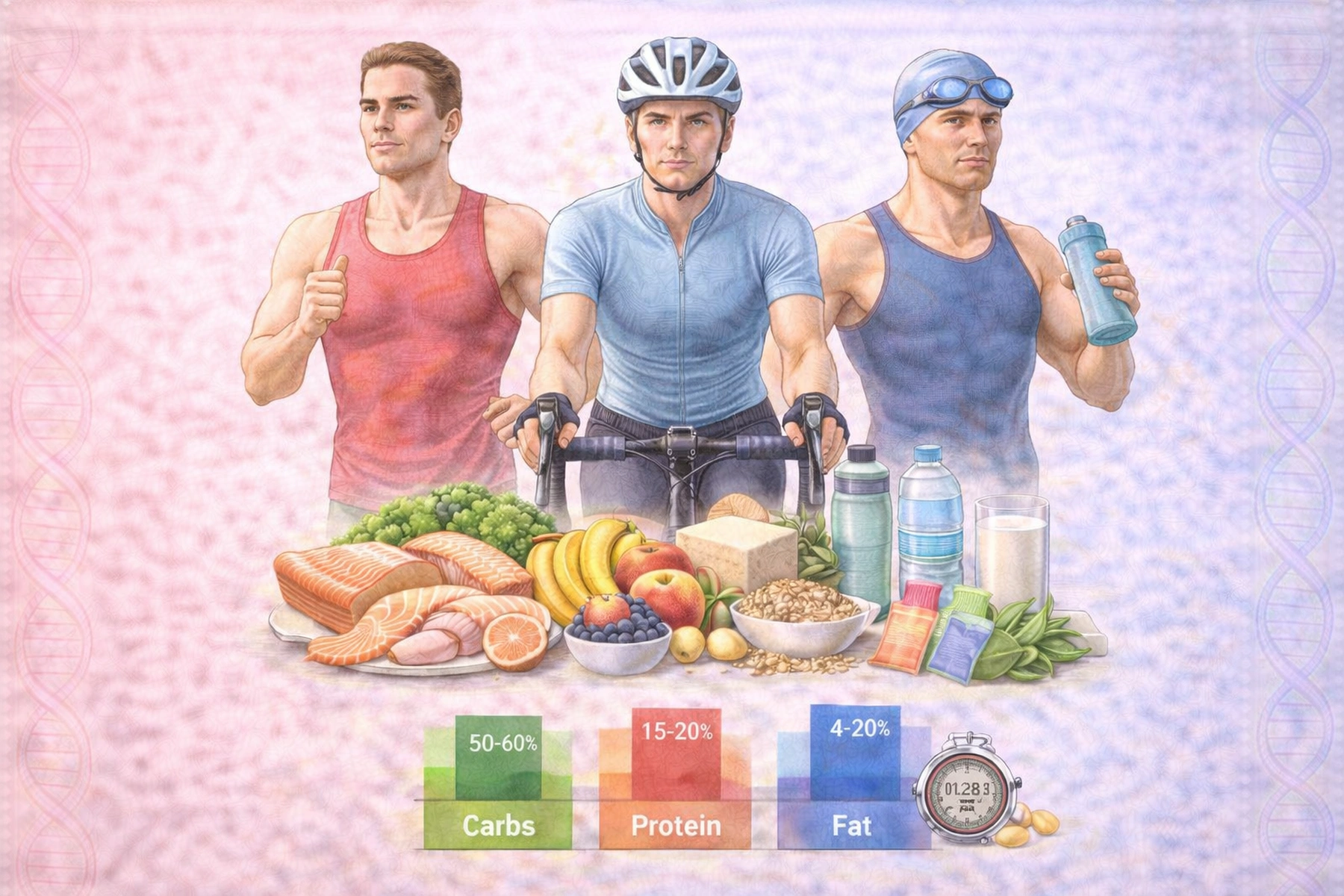
Daily macro goals for an 80 kg man training successfully or not so successfully for endurance
Target macronutrients
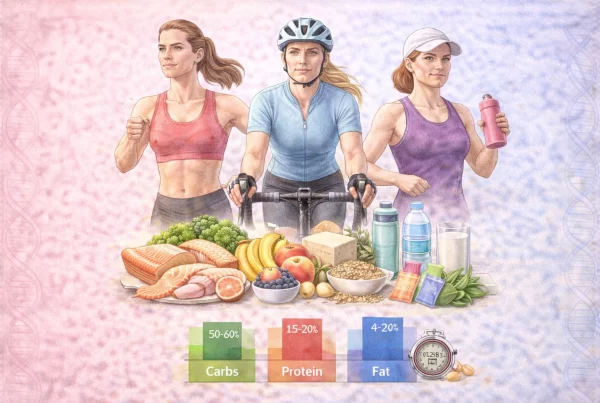
Carbohydrates 5–8 g/kg → 400–640 g/day
Protein 1.4–1.8 g/kg → 110–145 g/day
Fats 1.0–1.2 g/kg → 80–95 g/day
Calories ~3000–3600 kcal, more on long training days
These are fueling numbers for a mid-range endurance load — NOT extreme ultra-endurance fueling. In other words, for moderately crazy enthusiasts.
And now let us begin with the comparisons:
An endurance diet for meat-eaters / omnivorous men most often has the following characteristics:
Pros
✔ Very easy to reach high protein intake
✔ Low load on the digestive system, leading to better long-term comfort
✔ High iron/B12/DHA content, supporting excellent oxygen transport and recovery
✔ Effective glycogen replenishment with mixed macronutrients
✔ Muscle recovery supported by high-leucine protein
Cons
- Risk of excessive saturated fat if poorly managed
- Some men overeat protein, which displaces carbohydrates; it is important to avoid these cases
Meeting macronutrients, ease of achieving the targets
Protein ⭐⭐⭐⭐⭐⭐
Carbohydrates ⭐⭐⭐⭐⭐
Fats ⭐⭐⭐⭐⭐⭐
Digestive-system comfort ⭐⭐⭐⭐⭐
Iron ⭐⭐⭐⭐⭐
An endurance diet for vegetarian men most often has the following characteristics:
Pros
✔ Eggs and dairy products = very effective recovery protein
✔ Easy carbohydrate loading
✔ Very manageable digestive profile, or in plain language — it does not burden the digestive system as much as the evil vegans do
✔ Rich in micronutrients, such as calcium and potassium
Cons
- Iron absorption is lower than in meat-eaters
- Some dairy products can cause GI issues before running in sensitive athletes
Meeting macronutrients, ease
Protein ⭐⭐⭐⭐
Carbohydrates ⭐⭐⭐⭐⭐
Fats ⭐⭐⭐⭐
Digestive-system comfort ⭐⭐⭐⭐
Iron ⭐⭐⭐
An endurance diet for vegan men most often has the following characteristics:
Pros
✔ Extremely high carbohydrate availability, ideal for endurance
✔ High antioxidant intake → recovery benefits
✔ Lower inflammation markers
✔ Easy to maintain long-term glycogen with grains + fruit
Cons
- Lowest protein density — men need more grams because of larger bodies and higher turnover
- Higher dietary fiber content, which can lead to gastrointestinal problems during training
- Iron, B12, iodine, and DHA require supplementation or structure
- Protein per meal may be low unless planned with soy/seitan/protein isolates
Meeting macronutrients, ease
Protein ⭐⭐⭐
Carbohydrates ⭐⭐⭐⭐⭐
Fats ⭐⭐⭐⭐
Digestive-system comfort ⭐⭐⭐ (must be structured)
Iron ⭐⭐
Sample meal plans
As in the other articles, we will move from general talk to specifics by showing sample meal plans for the three types of people — meat-eaters, vegetarians, and vegans.
The plans are aimed at men who train, or struggle, for endurance. For the purpose of the article, we will use amounts needed by an 80 kg man. The physical loads that the presented meal ideas correspond to are:
- 60–120 minutes of running OR
- A 1.5–3-hour cycling session
Daily target:
✔ 450–500 g carbohydrates
✔ 110–130 g protein
✔ 80–90 g fats
✔ ~3200–3500 kcal
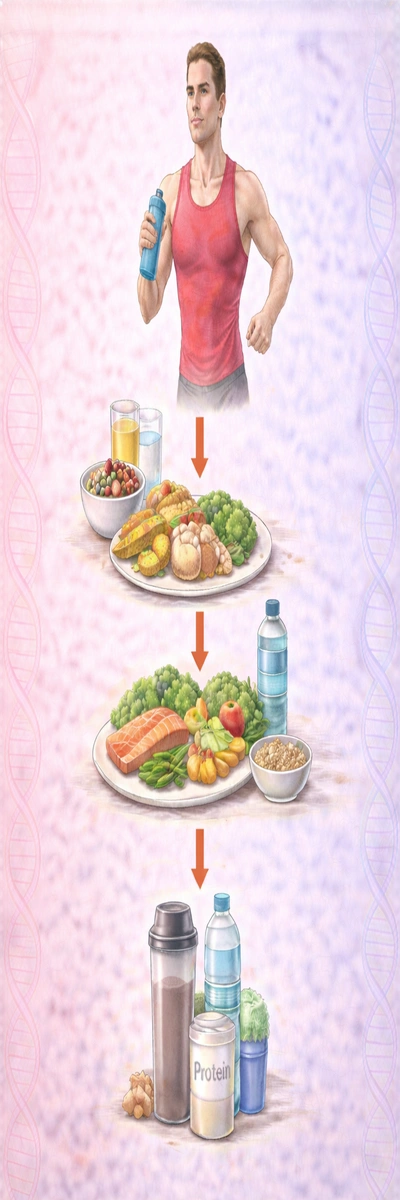
Meal plan for omnivorous men
Traditionally, we will start with a 1-day endurance plan for bad people who eat meat (~3300 kcal)
It includes the following macronutrients:
Carbohydrates around 480 g | Protein around 125 g | Fats around 85 g
Breakfast — Before training (around 750 kcal)
Carbohydrate-rich breakfast
- 2 cups cooked oats
- 1 banana
- 1 tbsp honey
- 2 eggs
- 1 cup orange juice
Macronutrients:
around 28 g protein / around 125 g carbohydrates / around 16 g fats
During training (around 200–300 kcal)
(For 75–120 minutes)
30–60 g carbohydrates/hour
(Gels, sports drink, Skratch, Maurten, banana)
Post-workout meal (around 850 kcal)
Chicken and rice recovery bowl
- 180 g grilled chicken
- 2 cups cooked rice
- 1 cup pineapple
- 1 tbsp olive oil
Macronutrients:
around 55 g protein / around 120 g carbohydrates / around 20 g fats
Lunch (around 750 kcal)
Turkey sandwich + fruit
Large whole-grain bread sandwich
- 140 g turkey meat
- Cheese
- Green salads
- Apple
- Granola bar
Macronutrients:
around 40 g protein / around 90 g carbohydrates / around 20 g fats
Dinner (around 900 kcal)
Beef or salmon + pasta
- 150 g salmon OR lean beef
- 2 cups pasta
- Tomato sauce
- Vegetables
- 1 tbsp olive oil
Macronutrients:
around 40 g protein / around 140 g carbohydrates / around 25 g fats
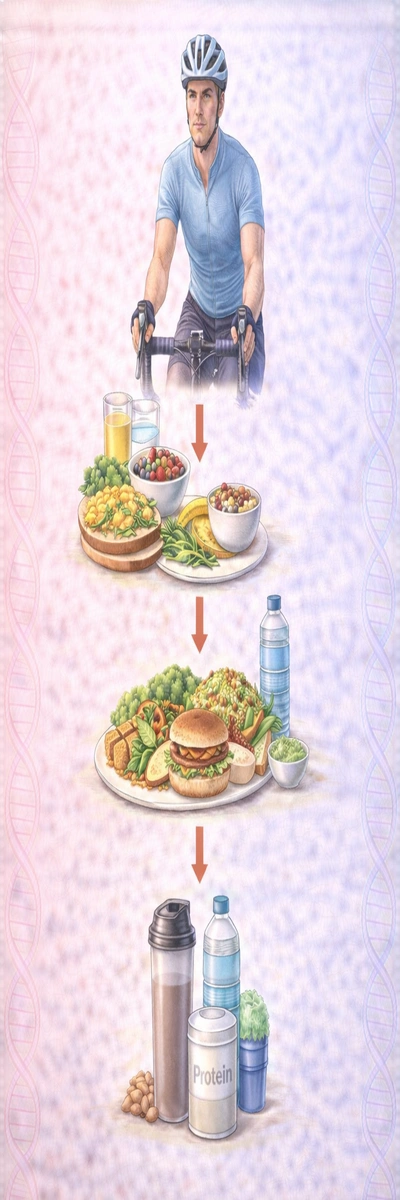
1-day endurance plan for a vegetarian (around 3200–3400 kcal)
Carbohydrates around 470 g | Protein around 115 g | Fats around 80 g
Breakfast (around 700 kcal)
- Dairy yogurt with carbohydrates
- 1.5 cups Greek yogurt
- 1.25 cups granola + berries
- Honey
Macronutrients:
around 35 g protein / around 110 g carbohydrates / around 12 g fats
During training (~200–300 kcal)
As in the omnivorous diet: 30–60 g carbohydrates/hour
After training (around 800 kcal)
Egg and quinoa recovery bowl
- 3 eggs + 2 egg whites
- 1.5 cups cooked quinoa
- Spinach + fruit
Macronutrients:
around 45 g protein / around 80 g carbohydrates / around 20 g fats
Lunch (around 700 kcal)
Cheese sandwich + fruit + cereal bar
- Whole-grain bread
- Cheese + vegetables
- Orange or apple
- Granola or cereal bar
Macronutrients:
around 30 g protein / around 90 g carbohydrates / around 18 g fats
Dinner (around 850 kcal)
Lentil pasta plate
- 2 cups lentil pasta
- Marinara
- Parmesan
- Drizzle with olive oil
Macronutrients:
around 35 g protein / around 140 g carbohydrates / around 18 g fats
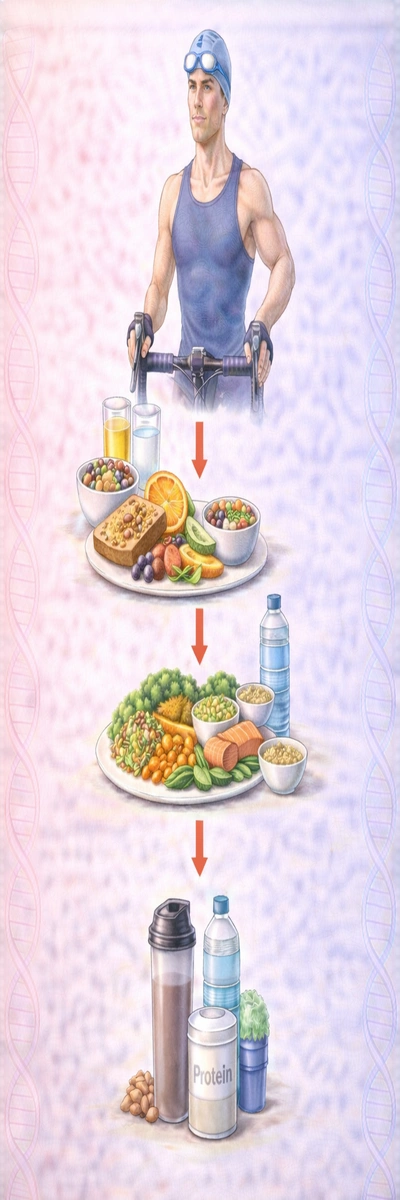
1-day endurance plan for an evil vegan (around 3200–3400 kcal)
Carbohydrates around 500 g | Protein around 120 g | Fats around 75 g
Designed with lower fiber content during training windows.
Breakfast (around 700 kcal)
Low-fiber vegan smoothie
- 2 scoops soy/pea isolate
- 1 banana
- 1 cup oats
- 350 ml soy milk
- Maple syrup
Macronutrients:
around 55 g protein / around 115 g carbohydrates / around 10 g fats
During training (around 200–300 kcal)
Vegan gels/drinks: GU, Clif, Maurten, Skratch.
After training (around 850 kcal)
Tofu and rice recovery plate
- 200 g tofu
- 2 cups white rice
- Cooked vegetables
- Soy sauce + sesame oil
- Pineapple, for fast glycogen replenishment
Macronutrients:
around 45 g protein / around 120 g carbohydrates / around 18 g fats
Lunch (around 700 kcal)
Hummus and avocado sandwich
- 2 slices bread
- Hummus
- Avocado
- Fruit
- Cereal bar
Macronutrients:
around 25 g protein / around 90 g carbohydrates / around 20 g fats
Dinner (around 900 kcal)
Seitan pasta plate
- 180 g seitan
- 2 cups pasta
- Nutritional yeast
- Marinara
Macronutrients:
around 45 g protein / around 140 g carbohydrates / around 18 g fats
Sources:
https://pubmed.ncbi.nlm.nih.gov/28642676/
https://link.springer.com/article/10.1186/s12970-018-0242-y
https://www.tandfonline.com/doi/full/10.1186/s12970-017-0174-y
https://pubmed.ncbi.nlm.nih.gov/28630601/
https://pubmed.ncbi.nlm.nih.gov/27886704/
https://www.sciencedirect.com/science/article/abs/pii/S0899900725000607
https://pmc.ncbi.nlm.nih.gov/articles/PMC12586379/
https://www.mdpi.com/2072-6643/17/15/2571