- Women have different needs when strength training
- Calorie intake is lower than men’s
- Protein needs increase during the luteal phase
- The risk of low energy availability is higher
- Iron requires special attention
- Fiber can make adequate intake more difficult
- The omnivorous diet is the easiest to follow
- The vegetarian diet is almost equivalent
- The vegan diet requires the most planning
- Leucine and protein quality are important
- Hypertrophy is possible with all three diets
- Success depends on a well-structured diet
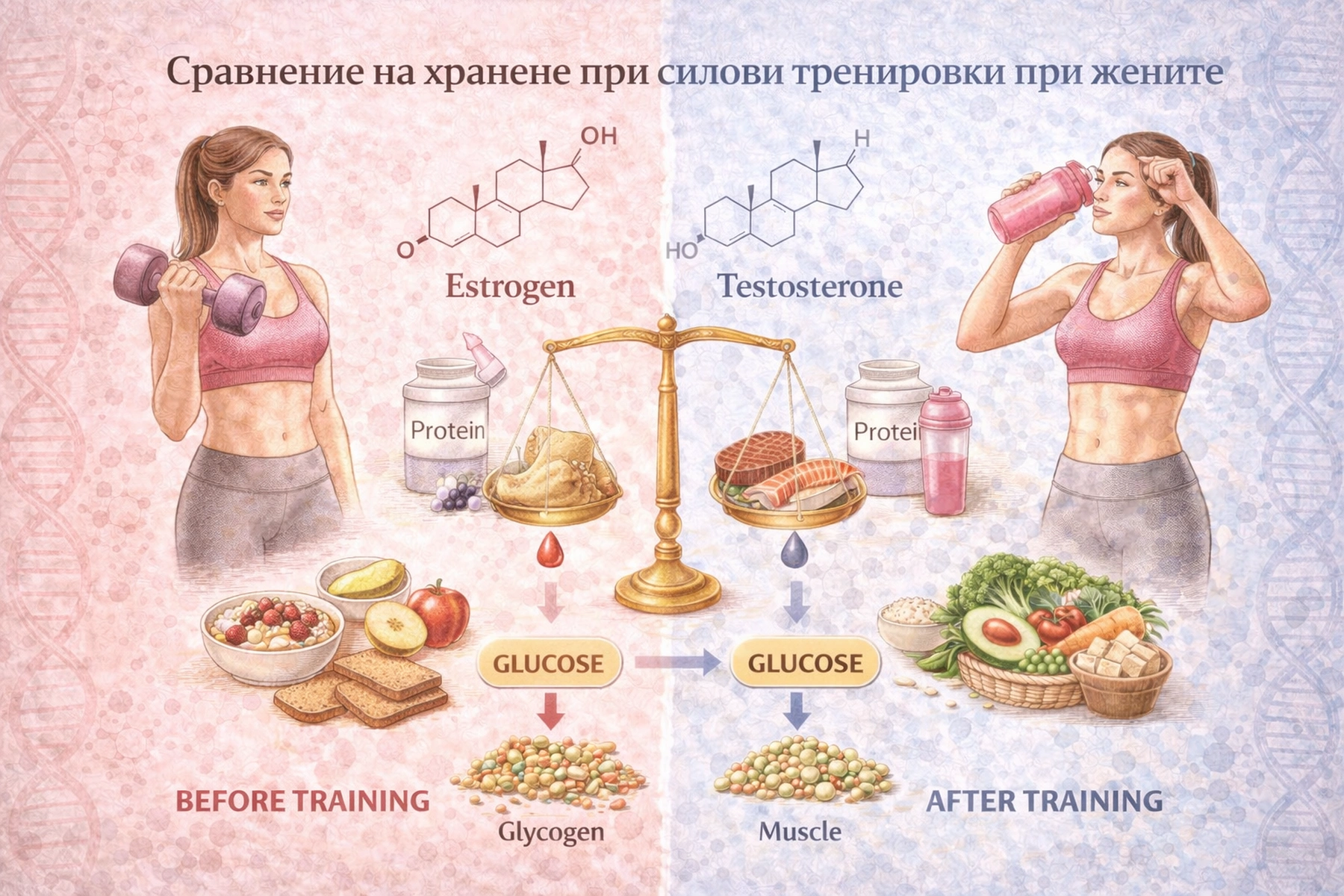
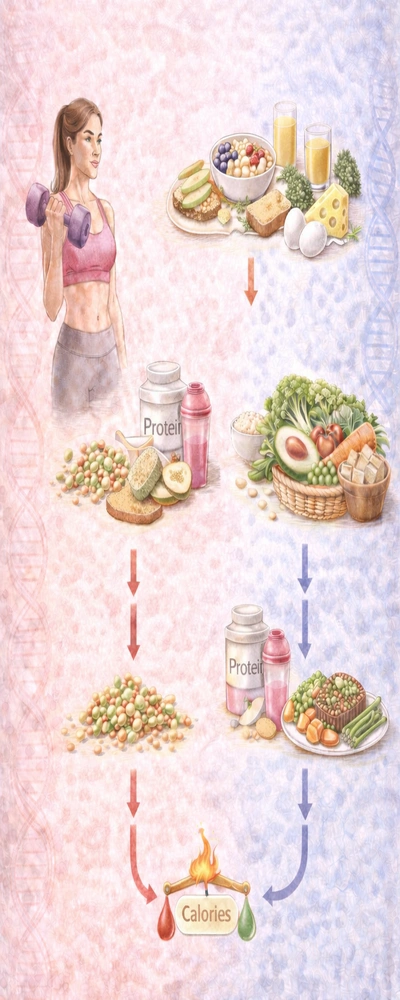
Once again, we will talk about training, weights, and nutrition. We are not tired of this topic, but this time we will focus on women, how things work for them, and the specifics that need to be taken into account. In addition to the necessary macronutrients, we will also look at the differences related to female physiology (lower calorie needs, effects of the menstrual cycle, higher risk of low energy availability, slightly higher protein needs during the luteal phase)
Considerations
For women, the following considerations should be kept in mind when it comes to strength training:
- Lower daily calorie needs compared with men
- Slightly increased protein needs during the luteal phase
- Higher risk of low energy availability (LEA)
- Higher gastrointestinal sensitivity (high fiber content, which leads to early satiety)
- Higher estrogen-driven fat oxidation, which requires different fueling patterns
- Vulnerability related to iron, especially in women following a plant-based diet
These factors directly affect how easily each diet supports strength, hypertrophy, and recovery.
Nutritional guidelines
Nutritional guidelines for omnivorous women doing strength training
This is the easiest diet for meeting all macronutrient needs
Why is this the case?
- Animal protein is rich in essential amino acids and has a high leucine content
- High protein content per calorie → easy to reach 1.6–2.2 g/kg without overeating
- Low burden on the digestive system (low fiber content in protein sources)
- Easy intake of iron and B12
- Easy maintenance of energy availability
Pros
✔ High-quality protein (meat, eggs, dairy products)
✔ Easy-to-distribute high-leucine meals of 25–40 g
✔ Easy-to-absorb protein without excess calories
✔ Supports recovery well
✔ Less need for supplements, possibly except vitamin D
Cons
- Possible high intake of saturated fat if the diet is not well designed
- Carbohydrates are still needed during the menstrual cycle; the higher carbohydrate needs are at the beginning of the cycle
Meeting macronutrient needs (ease-of-meeting rating)
Protein: ⭐⭐⭐⭐⭐ (very easy)
Carbohydrates: ⭐⭐⭐⭐⭐
Fats: ⭐⭐⭐⭐
Calories: ⭐⭐⭐⭐⭐
Digestive comfort: ⭐⭐⭐⭐⭐
Nutritional guidelines for vegetarian women doing strength training
This way of eating is almost as suitable and easy as the omnivorous diet for obtaining the necessary amount of protein
Why is this the case?
- Eggs + dairy products provide complete proteins
- It is much easier than with vegan diets to obtain protein without gastrointestinal problems
- Iron has lower absorption, but eggs/dairy products help maintain the desired levels
Pros
✔ High-quality protein sources (whey, eggs, Greek yogurt, cottage cheese)
✔ Easily achievable 1.6–2.0 g/kg without large food volume
✔ Good calcium intake, good leucine density
✔ Lower gastrointestinal burden than vegan diets
✔ Very compatible with strength goals
Cons
- Iron intake is lower than in omnivorous diets, and some women have problems with ferritin levels
- Requires mixing plant + dairy proteins for the best profile
- Female athletes are still at higher risk of LEA, especially on low-appetite days
Meeting macronutrient needs (ease-of-meeting rating)
Protein: ⭐⭐⭐⭐
Carbohydrates: ⭐⭐⭐⭐⭐
Fats: ⭐⭐⭐⭐
Calories: ⭐⭐⭐⭐
Digestive comfort: ⭐⭐⭐⭐
Nutritional guidelines for vegan women doing strength training
This requires the most planning — but it is a completely achievable and effective way of eating when done correctly
Women have:
- Lower calorie needs
- Higher sensitivity to fiber
- Higher risk of under-fueling
Therefore, vegan diets must be carefully structured for successful strength progress.
Challenges unique to vegan women involved in strength sports
- Plant protein sources are often high in fiber → early satiety, which leads to lower food intake, no matter how tasty the food is
- Lower leucine content in many plant proteins
- It is harder to reach 30–40 g of protein per meal without isolates
- Lower iron absorption → women are at significantly higher risk of deficiency
- Total energy intake may be too low → LEA → impaired recovery
Pros
✔ Can fully support hypertrophy when protein is combined from the right plant sources
✔ Excellent carbohydrate intake for training
✔ Lower inflammation when the diet is well planned
✔ Very nutrient-rich (folate, magnesium, potassium)
Cons
- The most difficult diet for women to reach the necessary amount of protein without stomach discomfort
- Iron, calcium, iodine, B12, and DHA require structured attention in order to be obtained
- May require protein powder and seitan to reduce the burden on the gastrointestinal tract
- Higher risk of LEA → impaired performance and cycle disturbances
Meeting macronutrient needs (ease rating)
Protein: ⭐⭐⭐ (requires planning)
Carbohydrates: ⭐⭐⭐⭐⭐⭐
Fats: ⭐⭐⭐⭐
Calories: ⭐⭐⭐ (because of high fiber content → satiety)
Digestive comfort: ⭐⭐ (depends on protein choices)
Why these differences are more important for women than for men
Women on plant-focused diets experience:
1) Higher iron needs + lower iron absorption → risk of deficiency
Especially vegans, who do not consume heme iron.
2) Higher omega-3 conversion, but lower dietary intake
Women convert ALA → DHA better, but plant-based diets do not contain DHA unless it is taken through supplements.
3) Lower calorie needs, but high-fiber foods → early satiety
The risk of LEA is dramatically higher for active women.
4) Protein needs during the menstrual cycle
Protein oxidation increases slightly during the luteal phase → protein needs increase by ~10%.
5) Higher gastrointestinal sensitivity
High-fiber vegan/vegetable-heavy diets can cause bloating → reducing the ability to eat enough.
For an easier comparison of the three ways of eating, you can look at the following table:
Characteristics/type of fat | Animal origin | Plant and dairy origin | Plant origin |
Protein quality | ⭐⭐⭐⭐⭐ | ⭐⭐⭐⭐ | ⭐⭐⭐ |
Ease of reaching 1.6–2.2 g protein/kg of personal weight | ⭐⭐⭐⭐⭐ | ⭐⭐⭐⭐ | ⭐⭐⭐ |
Digestive comfort | ⭐⭐⭐⭐⭐ | ⭐⭐⭐⭐ | ⭐⭐ |
Iron supplementation | ⭐⭐⭐⭐⭐ | ⭐⭐⭐ | ⭐⭐ |
Energy supply | ⭐⭐⭐⭐⭐ | ⭐⭐⭐⭐ | ⭐⭐ |
Amount of leucine per serving | High | High | Lower unless there is soy/seitan |
Potential for long-term muscle gain | Excellent | Excellent | Excellent if the protein is combined |
Comparison of eating patterns
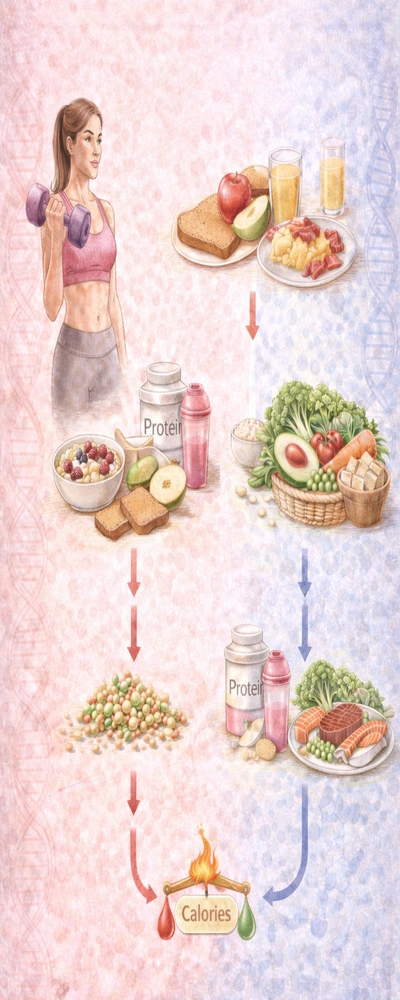
So that we do not give anyone a reason to claim that we are only giving advice without practical ideas, we will also show sample menus for women who do strength training. We will compare how a regular diet that includes meat can be replaced with a vegetarian and a vegan diet — do not worry, they do not bite.
In this case, we will look at what a 60 kg woman who does strength training needs. All three suggestions are designed around the idea of hypertrophy in women:
Macronutrients for a 60 kg woman doing strength training
Protein: 1.6–2.0 g/kg → 96–120 g/day
Carbohydrates: 3–5 g/kg → 180–300 g/day
Fats: 0.8–1.0 g/kg → 48–60 g/day
Calories: around 1800–2100 kcal depending on training volume
The plans below aim for:
✔ around 105–120 g protein
✔ around 200–250 g carbohydrates
✔ around 50–60 g fat
✔ around 1800–2050 kcal
✔ High-quality protein at each meal (≥ 25–30 g)
✔ Low to moderate fiber content for comfort during training
Meal plan for omnivorous women doing strength training (60 kg body weight)
Total: around 1900 kcal | 120 g protein | 230 g carbohydrates | 55 g fat
Meal 1 — Breakfast (around 450 kcal)
Yogurt and protein bowl
- ¾ cup Greek yogurt
- 1 scoop whey protein
- ½ cup oats
- ½ cup berries
Macronutrients: 40 g protein / 60 g carbohydrates / 6 g fat
Meal 2 — Lunch (around 500 kcal)
Chicken and quinoa bowl
- 100–120 g roasted chicken breast
- ¾ cup cooked quinoa
- Vegetables
- 1 tbsp olive oil
Macronutrients: 35 g protein / 45 g carbohydrates / 15 g fat
Pre-workout snack (~250 kcal)
- Banana
- A little yogurt, or ½ scoop whey in water
Macronutrients: 12–16 g protein / 35 g carbohydrates / 2–3 g fat
Meal 3 — Dinner (~600 kcal)
Beef/turkey pasta
- 90–100 g cooked lean beef or turkey
- 1.5 cups cooked pasta
- Tomato sauce
- A little Parmesan
Macronutrients: 35 g protein / 90 g carbohydrates / 12 g fat
Daily macronutrient intake
Protein: around 120 g
Carbohydrates: around 230 g
Fats: around 55 g
Calories: around 1850–1950
Meal plan for vegetarian women doing strength training (60 kg body weight)
Total: around 1850 kcal | 115 g protein | 220 g carbohydrates | 55 g fat
Meal 1 — Breakfast (around 450 kcal)
Oats + whey + milk
- 1 cup oats
- 1 scoop whey/casein
- 250 ml milk, it can be nut milk, even better
- 1 banana
Macronutrients: 35–40 g protein / 75 g carbohydrates / 8 g fat
Meal 2 — Lunch (around 500 kcal)
Egg + feta and rice/quinoa bowl
- 2 whole eggs + 2 egg whites
- ½ cup cooked rice or quinoa
- Green salads
- 1 tbsp olive oil
- 40–50 g feta
Macronutrients: 35 g protein / 35 g carbohydrates / 20 g fat
Pre-workout snack (around 200 kcal)
- 1 cup Greek yogurt
- 1 kiwi or small apple
Macronutrients: 15–20 g protein / 20–25 g carbohydrates / 0–2 g fat
Meal 3 — Dinner (around 650 kcal)
Lentil pasta
- 1 cup cooked red lentils
- 1.5 cups cooked whole-wheat or lentil pasta
- Tomato sauce
- Parmesan, optional
Macronutrients: 40 g protein / 90 g carbohydrates / 10 g fat
Daily macronutrient intake
Protein: around 115 g
Carbohydrates: around 215–230 g
Fats: around 50–55 g
Calories: around 1800–1900
Meal plan for vegan women doing strength training (60 kg body weight)
Total: around 1900 kcal | 110–120 g protein | 230 g carbohydrates | 45–55 g fat
Vegan diets require extra attention to protein density and fiber control in order to avoid a feeling of fullness that would make consuming the necessary calories a difficult task.
Meal 1 — Breakfast (~430 kcal)
Vegan protein smoothie
- 1 scoop soy/pea isolate
- ½ cup oats
- 1 banana
- 250–300 ml fortified soy milk
Macronutrients: 35–40 g protein / 65 g carbohydrates / 8–10 g fat
Meal 2 — Lunch (~500 kcal)
Tofu-rice bowl, lower-fiber version
- 150 g firm tofu
- 1 cup white rice
- Cooked spinach
- 1 tbsp olive oil or sesame oil
Macronutrients: 35 g protein / 60 g carbohydrates / 15 g fat
Pre-workout snack (~250 kcal)
- 2 slices white bread + jam
- ½ scoop vegan protein
Macronutrients: ~20 g protein / 40 g carbohydrates / 2 g fat
Meal 3 — Dinner (~700 kcal)
Seitan pasta plate
- 150 g seitan
- 1.5–2 cups pasta
- Tomato sauce
- Nutritional yeast
Macronutrients: 40–45 g protein / 90 g carbohydrates / 8–10 g fat
Daily macronutrient intake
Protein: around 110–120 g
Carbohydrates: around 230 g
Fats: around 45–55 g
Calories: around 1850–2050
Sources:
https://pubmed.ncbi.nlm.nih.gov/28642676/
https://link.springer.com/article/10.1186/s12970-018-0242-y
https://www.tandfonline.com/doi/full/10.1186/s12970-017-0174-y
https://pubmed.ncbi.nlm.nih.gov/28630601/
https://pubmed.ncbi.nlm.nih.gov/27886704/
https://www.sciencedirect.com/science/article/abs/pii/S0899900725000607
https://pmc.ncbi.nlm.nih.gov/articles/PMC12586379/
https://www.mdpi.com/2072-6643/17/15/2571