- Men and women metabolize differently
- Women use more fat for energy
- Men rely more on carbohydrates
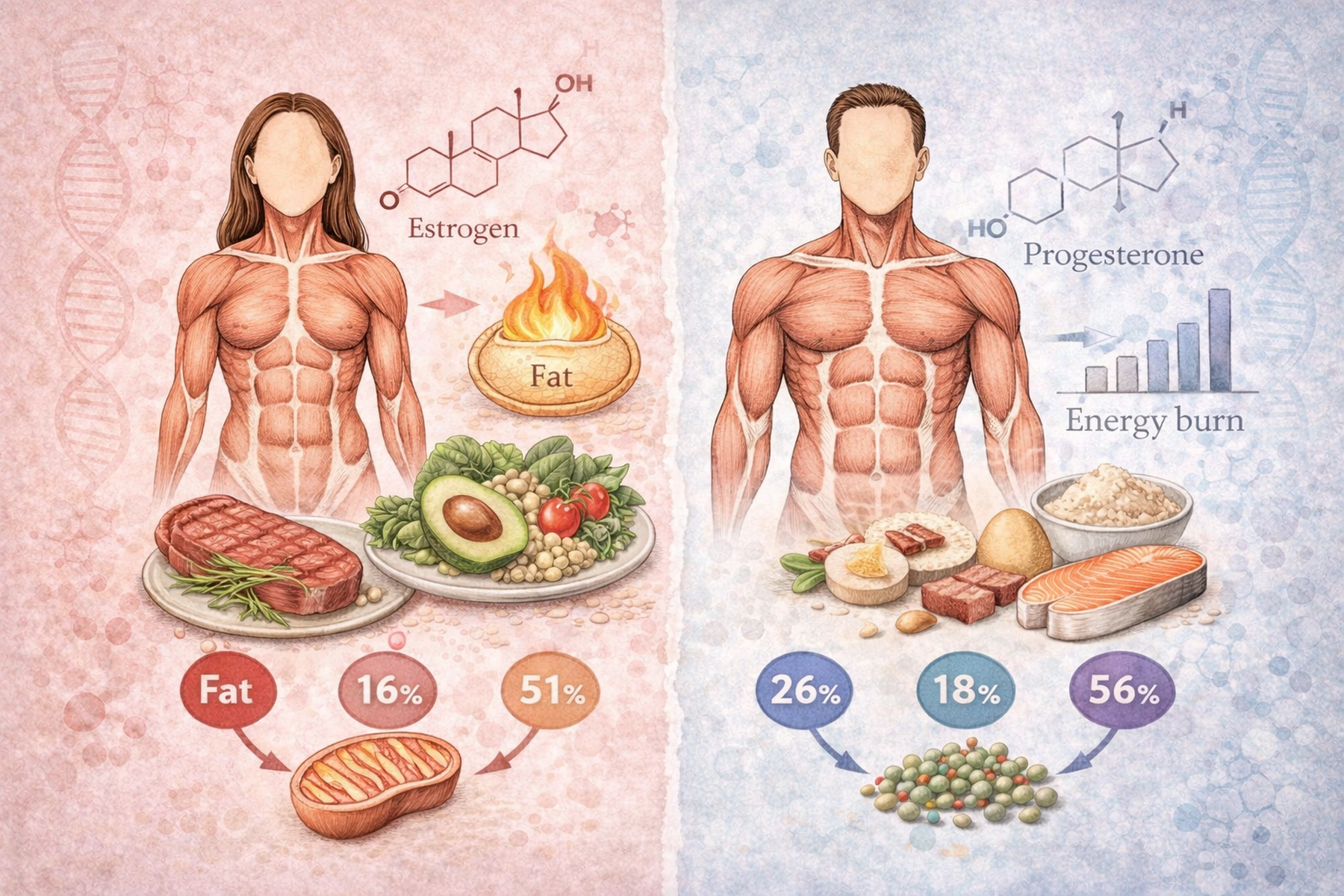
- Estrogen changes fuel selection
- The menstrual cycle affects metabolism
- Men have higher absolute protein needs
- Women recover their muscles more efficiently
- Omega-3 is utilized better by women
- Men more often need DHA/EPA
- Nutrition and training require a different approach
- Identical recommendations do not work identically
- Sex matters in sports nutrition
Very often in medicine, nutrition, and science in general, men and women are treated as if they were the same, which, however politically correct it may be nowadays, actually works against women. This is because until about 30 years ago, studies on nutrition, sport, health, and so on were conducted mainly on men.
It was believed that there were no major differences between the two sexes, and that whatever worked for the male half of the population would also work for the female half.
This, however, is far from the truth, because our bodies are very different in terms of bone structure, hormones, and hormonal cycles. This makes them behave in specific ways and react differently to the same environmental stimuli, such as food, physical activity, stress, and others.
Main differences in carbohydrate metabolism between men and women.
Baseline carbohydrate use
In many studies, including endurance studies and moderate-intensity exercise research:
- Women usually use fewer carbohydrates and more fat at the same relative intensity as men.
- Women store muscle glycogen more efficiently.
- Men show higher levels of muscle glycogenolysis (breakdown of stored carbohydrates).
- This has been consistently demonstrated in physiological reviews and articles on exercise metabolism.
Hormonal influence (estrogen)
- Estrogen is the main driver of sex differences in carbohydrate metabolism:
- Estrogen reduces carbohydrate oxidation and, as a result, shifts fuel preference toward fat.
- It improves glycogen storage during endurance exercise, which supports endurance in women
- It leads to lower dependence on blood glucose and lower glycogen depletion compared with men.
- Because men have much lower estrogen levels, they rely more on carbohydrate oxidation during the same effort.
Influence of the menstrual cycle on carbohydrate metabolism
The menstrual cycle changes nutrient utilization:
- Follicular phase (low estrogen/progesterone):
- Carbohydrate oxidation is higher
- Metabolism is more similar to that of men
- Luteal phase (high estrogen/progesterone):
- Carbohydrate oxidation decreases
- Fat oxidation increases
- Appetite and energy intake often increase
Practical consequences — what actually happens
- Women may not need such aggressive carbohydrate loading as men for similar endurance.
- Men benefit more from pre-workout carbohydrate fueling (for example, glycogen loading). In other words, if a man and a woman consume the same amount of carbohydrates, for example honey before training, the man will gain greater benefit from it in the form of energy
- Women’s carbohydrate needs vary across the menstrual cycle, being slightly higher in the follicular phase.
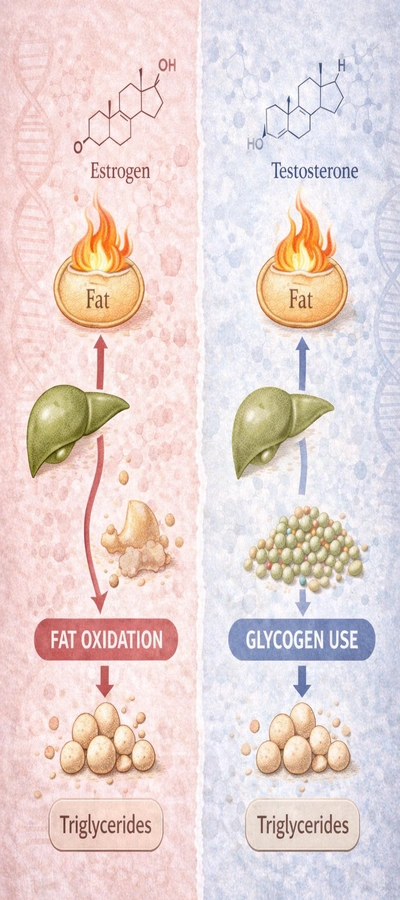
Main differences in fat metabolism between men and women.
Baseline fat oxidation
Women oxidize more fat than men at rest and during exercise.
These are some of the most common findings in metabolic research:
- Women show higher whole-body lipolysis (breakdown of stored fat).
- The use of intramuscular triglycerides (IMTG) during exercise is higher in women.
- Women rely less on carbohydrates and more on fat to meet their energy needs.
Hormonal influence (estrogen again)
Estrogen upregulates the enzymes involved in fat oxidation and shifts the substrate mix away from carbohydrates.
Main functions in fat metabolism:
- Improves fat mobilization
- Promotes the use of IMTG
- Increases the availability of free fatty acids
This is why women who train for endurance have more intramuscular triglyceride stores and use them more efficiently.
Influence of the menstrual cycle on fat metabolism
During the luteal phase, elevated estrogen and progesterone levels lead to:
- Greater reliance on fat metabolism
- Reduced use of carbohydrates
- Increased availability of plasma lipids
Sex differences in omega-3 fatty acid metabolism
- Women convert ALA → EPA/DHA more efficiently than men
- Estrogen upregulates conversion enzymes
- Women have significantly higher DHA status than men on similar plant-based diets
This has major consequences for vegan/vegetarian nutrition:
- Men may need algae-derived DHA/EPA supplements
- Many premenopausal women maintain DHA levels more easily from ALA sources (flaxseed, chia, walnuts), although this is somewhat individual
What are the main differences in protein metabolism between men and women.
Baseline protein use
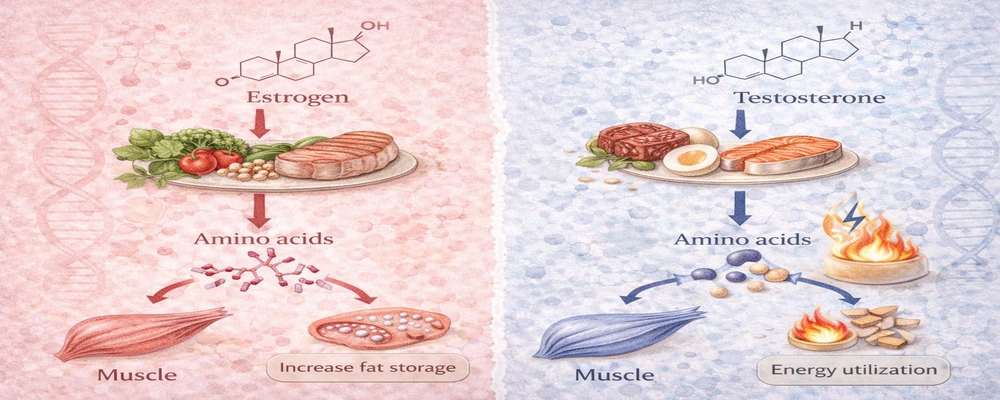
Men and women show similar protein oxidation per kg in controlled studies, but with the small difference that:
Men oxidize more protein in absolute grams/day
WHY IS THIS THE CASE?
- Higher total lean muscle mass
- Higher resting energy expenditure
- Higher absolute intake
Protein recommendations (per kg of body weight) are the same for both sexes, but total grams/day are higher in men because of body size.
Differences in muscle protein synthesis (MPS)
- Women and men have a similar relative increase in muscle protein synthesis after training.
- Women generally have better protection against muscle damage and recover faster from muscle injuries.
- Men tend to have greater results because of higher baseline muscle mass and testosterone levels.
Effects of protein on the menstrual cycle
Limited but interesting evidence:
- Luteal phase: higher protein oxidation and higher energy expenditure
- Many female athletes perform better with a slightly higher protein intake during this phase
- Appetite often increases, so it is easier to meet protein needs
Practical consequences — what actually happens
Women may need more attention during dieting phases; they are more vulnerable to low energy availability, which reduces the efficiency of protein metabolism.
With plant-based diets, both sexes would benefit from:
- Soy protein
- Combining legumes and grains
- Using protein isolates for athletes or people on a diet
To conclude, we can summarize what the main sex differences consist of and what these differences mean
Metabolism type | Men | Women |
Carbohydrates | Higher carbohydrate oxidation, higher glycogen utilization | Lower carbohydrate oxidation, more glycogen stores |
Fats | Lower fat oxidation | Higher fat oxidation (especially during endurance) |
Proteins | Higher absolute protein conversion | Similar conversion to kg weight; better protection from muscle damage |
Hormonal influence | Testosterone → greater lean mass | Estrogen → higher fat oxidation, lower carbohydrate utilization |
Menstrual cycle | They are sparing it | Luteal phase: ↑ fat utilization, ↓ carbohydrate utilization; Follicular: more carbohydrate utilization |
Omega-3 conversion | Lower conversion of ALA → DHA/EPA | Higher conversion (driven by estrogen) |
These physiological differences affect:
- Training and sports nutrition
- Fat-loss strategies versus muscle-gain strategies
- Micronutrient vulnerability in vegans/vegetarians
- Carbohydrate periodization
- Omega-3 needs
- Responses to fasting or low-carbohydrate diets
- Risk of low energy availability, which is higher in women
Sources:
https://www.cambridge.org/core/journals/public-health-nutrition/article/epicoxfordlifestyle-characteristics-and-nutrient-intakes-in-a-cohort-of-33-883-meateaters-and-31-546-non-meateaters-in-the-uk/BF14D307B5A33B572CFB2A3050410974
https://pmc.ncbi.nlm.nih.gov/articles/PMC2129154/
https://www.sciencedirect.com/science/article/pii/S0002916522036735
https://journals.plos.org/plosone/article?id=10.1371%2Fjournal.pone.0148235
https://pmc.ncbi.nlm.nih.gov/articles/PMC12174276/
https://journals.physiology.org/doi/full/10.1152/jappl.2001.90.2.447
https://pmc.ncbi.nlm.nih.gov/articles/PMC1479724/