- Workers are at the centre of the transition
- Without planning, inequalities grow
- Livestock farming is a highly vulnerable sector
- New jobs are already emerging
- The risk lies in the mismatch between places and skills
- Retraining must be paid
- Social protection is mandatory
- New industries must reach the regions
- Workers’ voices must be heard
- Farmers also need support
- A just transition requires accountability
- Good policy decides whether there are winners
As food systems shift toward lower emissions, healthier eating and more sustainable production — or at least that is what we would like to happen — millions of workers in livestock farming, meat processing and feed crop sectors are facing one of the deepest labour transitions of the next decade. Reports from the Laudes Foundation and the Stockholm Environment Institute highlight the same message: decarbonising food systems without worker-centred planning will lead to inequality, job losses and political backlash.
A “just transition” ensures that transformations are not only environmentally necessary, but also socially fair — protecting workers, creating new opportunities and addressing long-standing injustices in the food chain.
Why the food system transition affects workers most strongly
Livestock and meat supply chains are highly labour-intensive, often low-paid and heavily dependent on vulnerable workers such as migrants and women. Many roles — especially in meat processing — involve high physical risk, repetitive strain and limited workplace mobility.
In the EU, the USA and the United Kingdom, food systems account for around 15% of total emissions, with livestock responsible for most methane and a large share of nitrous oxide. To meet climate targets, governments and industries must reduce the share of high-emission livestock farming, improve efficiency and, respectively, change consumption patterns. For workers, this means:
- declining demand for labour in livestock farming
- less feed required for animal agriculture
- structural change in processing jobs
- automation in the meat-processing industry
- increased demand in plant-protein processing
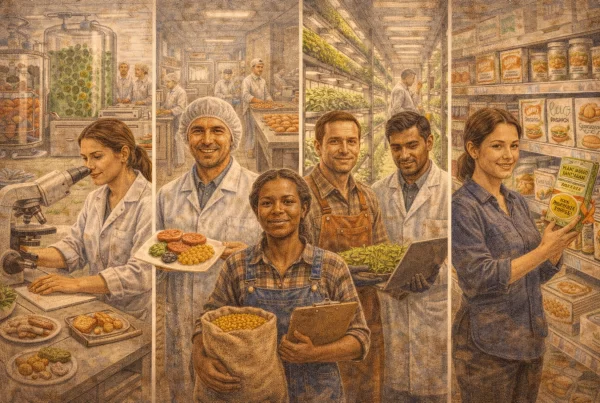
- growth in sustainable agriculture and ecosystem restoration
Without planning, all these changes fall unevenly on low-wage communities.
Principles of the transition
Three core principles of a worker-centred transition
A just transition would be just if it were built on:
Inclusion
Workers must participate in decisions about the future of their jobs. This includes trade unions, migrant worker groups, women’s associations and informal labour networks.
Adaptation
Workers need a real ability to shape their own transition: paid retraining, the right to consultation and guarantees that change is not imposed from above.
Accountability
Governments, companies and financial actors must be held responsible for protecting workers and documenting impacts during the decarbonisation of the food system.
Trends
Where job losses are concentrated
Sectors at highest risk:
- Industrial livestock farming — cattle, pigs, poultry
- Feed crop production — maize, soy
- Meat processing and packaging
- Animal feed logistics
Why these sectors are at risk:
- shift toward plant-based foods
- methane-reduction policies
- technology and automation
- tightening regulations
- outsourcing and consolidation
Workers in these sectors usually face low wages, high injury rates and few transition opportunities unless those opportunities are actively built.
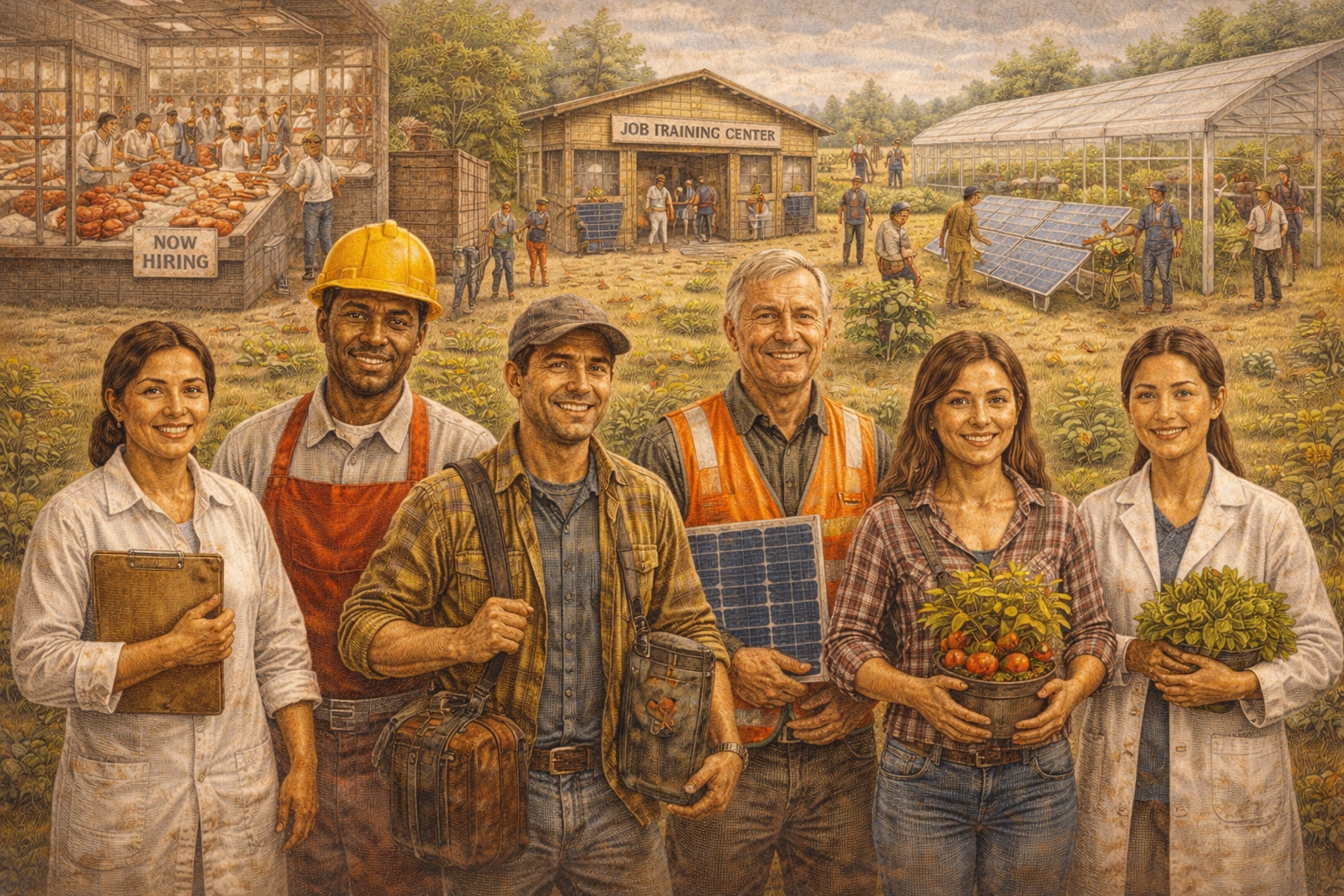
Where new jobs are emerging
The transition away from high-carbon food systems changes work — it does not eliminate it.
New jobs are emerging in:
Plant-based food production
- Higher-volume production roles, quality control, packaging and automation.
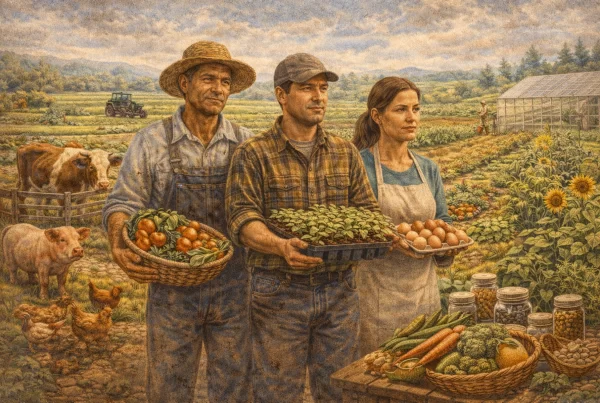
Sustainable and regenerative agriculture
- Diversified crops, legumes, mixed systems and farming focused on soil health.
Ingredient processing
- Milling, extraction and fractionation for plant proteins.
Ecosystem restoration and climate services
- Afforestation, waterway restoration, land stewardship and wildfire prevention.
Local food systems
- Food hubs, distribution networks and waste-reduction systems.
These new roles can offer better pay, higher safety and greater career mobility, but workers must be supported into them.
Risk: mismatch between skills and geography
Most livestock-dependent regions are rural, while new processing jobs often cluster in industrial zones near cities. Without thoughtful location strategies, jobs move, but workers cannot.
In addition, workers in livestock farming or meat processing often lack the qualifications required for new manufacturing or crop-diversification roles. Barriers include:
- limited access to training
- language or migration status
- lack of transport
- debt and infrastructure lock-in for agricultural producers
A just transition addresses these inequalities directly.
Strategy
What a real worker-centred strategy looks like
1) Paid retraining + guaranteed job placement — who will pay and who will guarantee the jobs, however, is a question with increased difficulty.
Training must be short-term, local and directly tied to actual vacancies.
2) Social protection packages
Wage insurance, transition payments, portable health and pension benefits.
3) Regional industrial policy
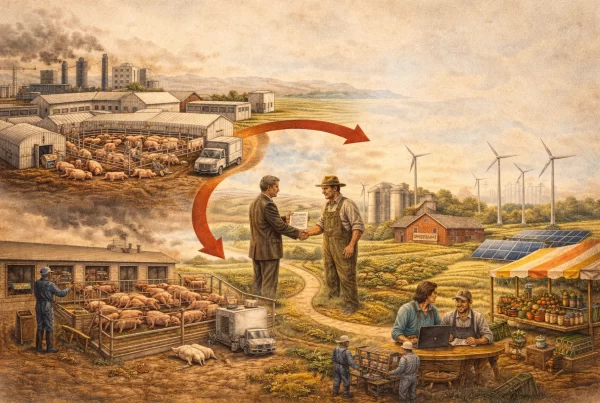
Incentives to open new plant-based or processing facilities in livestock-dependent regions, not only in cities.
4) Support for farm transition
Diversification subsidies, buyouts of non-viable operations and debt relief.
5) Workers’ voice
Trade union participation, community representation and collective bargaining rights in new sectors.
6) Monitoring and accountability
Governments must assess labour impacts and enforce compliance requirements for companies receiving transition-related subsidies.
Conclusion
A just transition for workers in the meat-processing and livestock industries is not automatic. It requires planning, participation and protection. The alternative — uncontrolled decline in rural employment and worsening inequality — threatens both climate action and social stability.
But with the right support, the transition toward a plant-based food system can be a historic opportunity: turning dangerous, low-paid jobs into safer and higher-quality work, while building a greener economy that leaves no worker aside. How can a person not feel motivated to eat one steak less?